
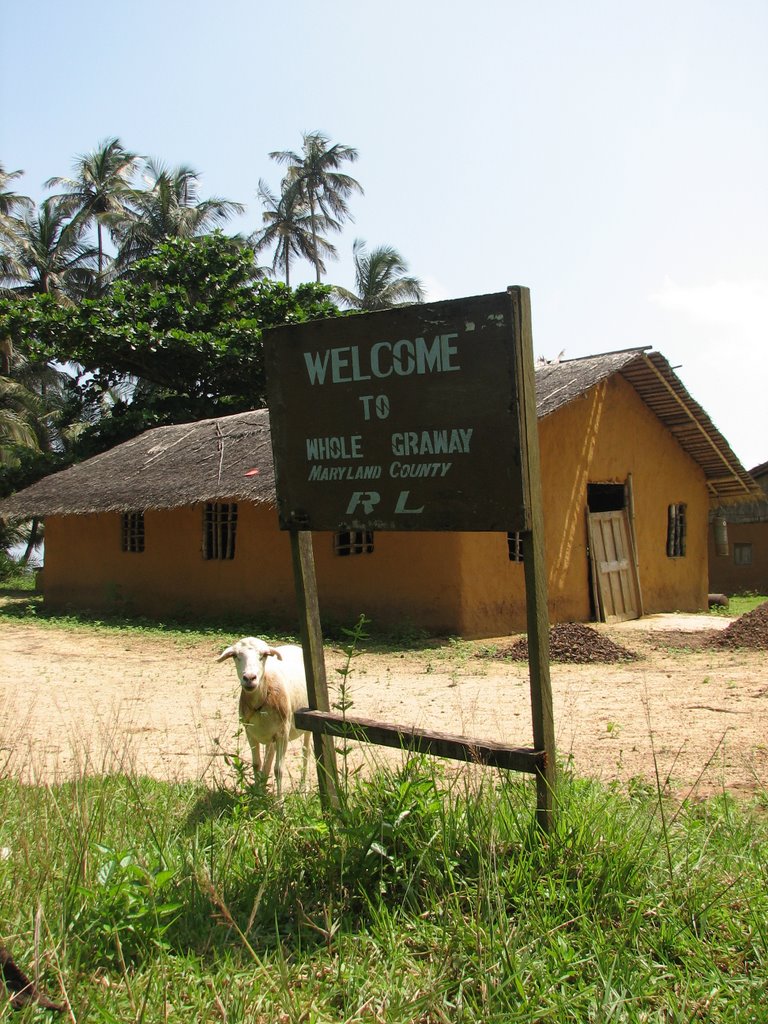
 About an hour's drive from Harper City, Maryland County, along a dusty road winding through lush green landscapes that make one dream of building a sprawling vacation home far from the madding crowd, there is a large town called Whole Graway. (And yes, there is a smaller town nearby called Half Graway!) Whole Graway (pronounced erroneously by most people as "Ho Gravy") is the heart of the Nyemoweh Chiefdom. Situated right near the palm-lined beach, the houses are large mud structures, usually square or rectangular, with thatched roofs. The round structures with cone-shaped roofs are the kithcens -- often shared by more than one family. There are around a hundred houses in the town, but because it is the middle of the day, it is peaceful and quiet. Most of the adults have gone to the farms, leaving behind the elderly, the very young, and the goats who run ahead of our vehicle to warn everyone that strangers have come to visit.
Tuesday, June 27, 2006
Welcome to Whole Graway
About an hour's drive from Harper City, Maryland County, along a dusty road winding through lush green landscapes that make one dream of building a sprawling vacation home far from the madding crowd, there is a large town called Whole Graway. (And yes, there is a smaller town nearby called Half Graway!) Whole Graway (pronounced erroneously by most people as "Ho Gravy") is the heart of the Nyemoweh Chiefdom. Situated right near the palm-lined beach, the houses are large mud structures, usually square or rectangular, with thatched roofs. The round structures with cone-shaped roofs are the kithcens -- often shared by more than one family. There are around a hundred houses in the town, but because it is the middle of the day, it is peaceful and quiet. Most of the adults have gone to the farms, leaving behind the elderly, the very young, and the goats who run ahead of our vehicle to warn everyone that strangers have come to visit.


Tuesday, June 20, 2006
Communication for the Nation
 Lonestar Cell was launched in Pleebo and Harper Cities the day I arrived in Maryland County. What a relief! From Foya City in Lofa, to Harper City in Maryland – Lonestar Cell has the widest coverage, the clearest connection, and the best customer service...by far!
Monday, June 19, 2006
River Gbeh
 Once upon a time, Liberia was divided into 13 Counties. River Gee and Gbarpolu Counties were created in recent years, bringing the number of counties to 15. There are two rivers running through River Gee County: River Gee, and River Gbeh. River Gbeh is the most powerful, with waves flowing fast and crashing noisily against the rocks. Makes one wonder why the county was named River Gee instead.
Sunday, June 18, 2006
Muddy Boots
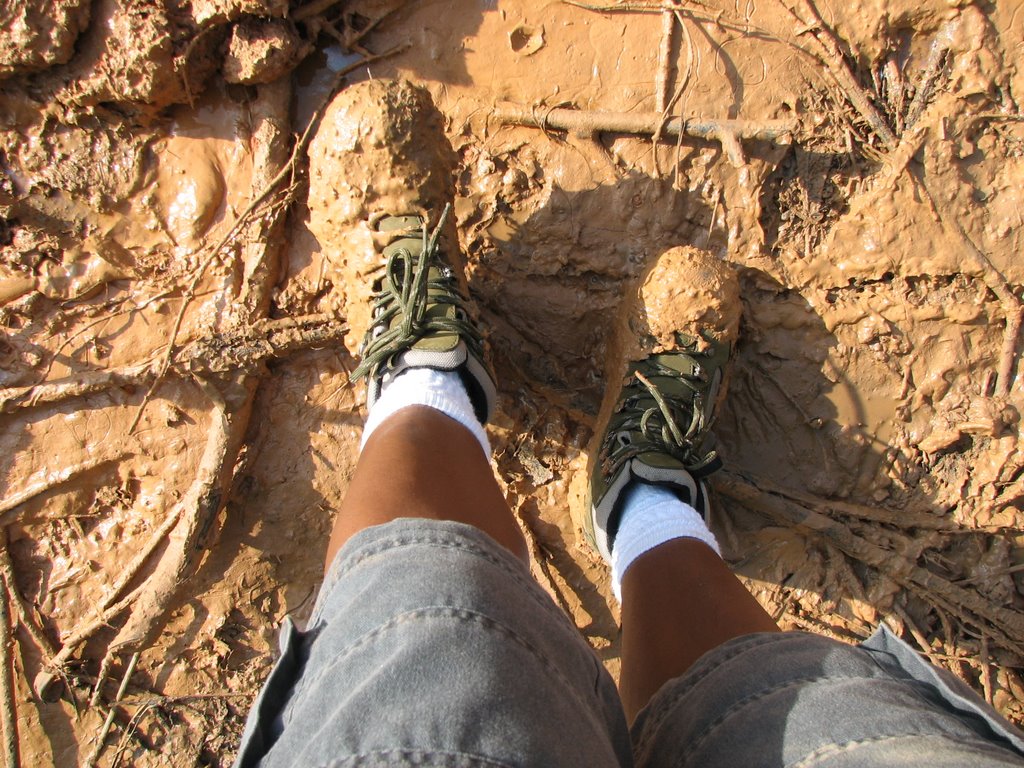 I ordered my waterproof hiking boots online, and when they arrived I thought I had overdone it. Even though I had heard stories of the Rainy Season upcountry roads (some with stretches so bad they have names), the boots looked and felt too serious for little old Liberia. Boy, was I wrong! I’m using them for the first time on a trip to River Gee County in the less-traveled southeastern region of the country.
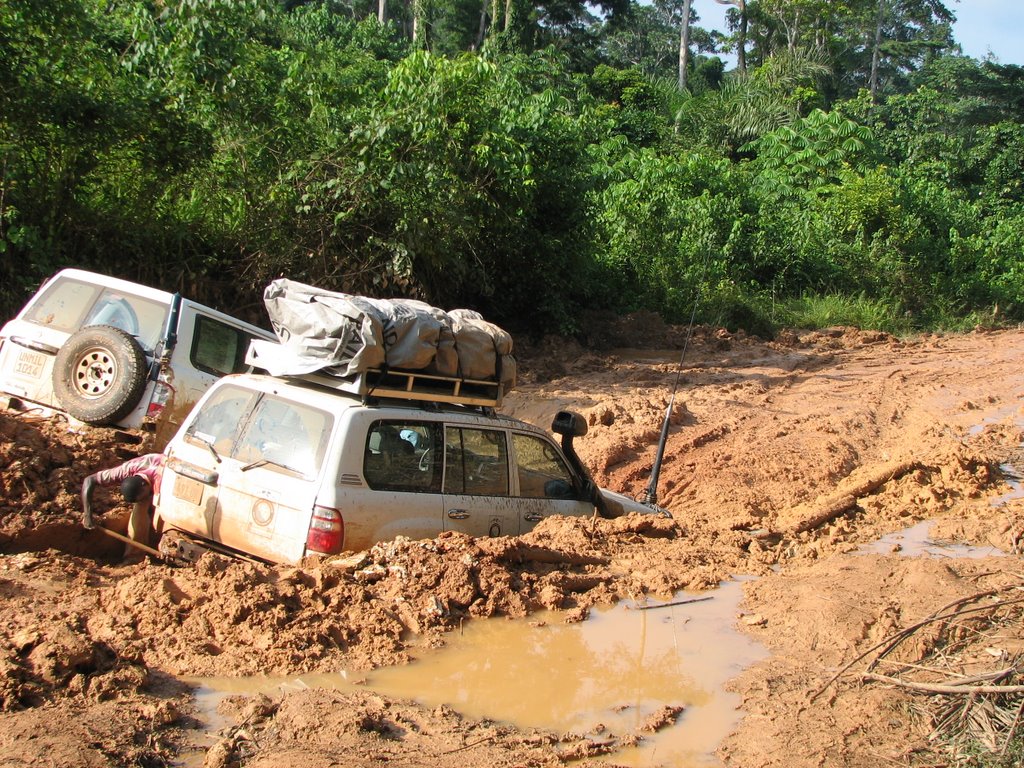 Even though it didn’t rain much during the days leading up to our journey, what did come from the sky was enough to turn the infamous parts of the unpaved “highway” into bowls of mud soup and traps of sticky red clay. When we aren’t stuck in one for hours struggling to get ourselves out, we’re stuck waiting for hours for other unfortunate souls to get out first. While we wait I love plodding around in the mud with confidence (and an air of experience in rough terrain). It’s also satisfying to know that if we have to hike several miles to the nearest village my boots will be adequately challenged.
Thursday, April 27, 2006
"What's New for April?"
That was a question posted on Liberia Stories earlier this month.
Well, what's new for April is actually old. After a full year of searching for the perfect words (and not finding them), I have decided to just go ahead and post some of the pictures I took last April at the 25th Anniversary Memorial Celebration for the 13 government officials killed on April 22, 1980, shortly after the coup d'etat. They are posted along with the draft I wrote back then.
I think another reason it has taken me so long to share what I have is that no images can adequately convey the sheer power of that day.
I have posted each picture separately (in the April 2005 folder) so that relatives and friends can add comments and personal memories. I, too, will post the perfect words as they come to me.
Please Note: You do not have to set up your own blog to make a comment. You may use the "anonymous" identity, and write your name (if you wish) in your post.
Thursday, March 23, 2006
The Fish Gods of Gbaota
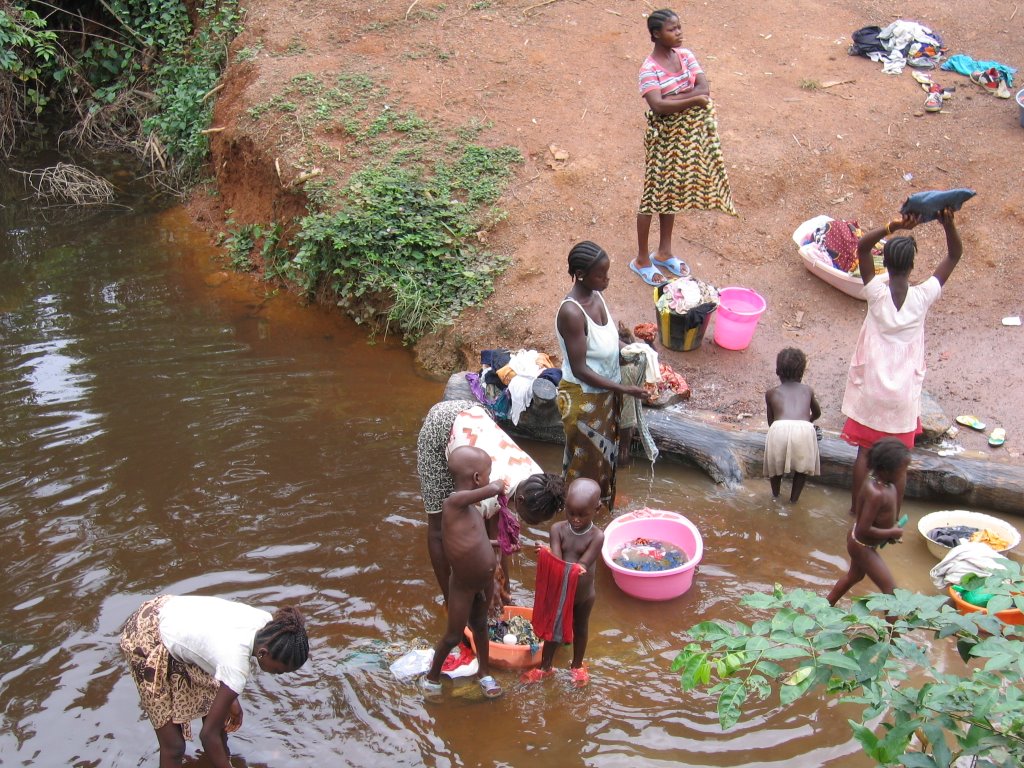 Almost three hours out of Monrovia, on the highway to Gbarnga, there is a little town with an infamous river running through it. One part of the river is used for bathing and washing clothes, and another part is full of giant catfish that have lived there unmolested since the olden days. They come to the surface in a wild thrashing frenzy if you throw pieces of bread in the water. During the civil war, I am told, when there was no food and people were so hungry that they ate rats, lizards, and even other human beings, no one even considered catching the fish of Gbaota.
Legend has it that long ago, before the war, people used to bring their problems to the fish. After such visits, which were made in consultation with certain gifted people from the town, all sorts of requests would be granted. Even women who went there with infertility problems would finally bear children. But anyone who dared to eat the fish would fall into misfortune and ill health, and die.
Town Chief Harrison Cooper says once a group of people began fishing there, claiming that as Christians, no harm would come to them if they ate the fish. “They saw for themselves,” Cooper added with a shrug, “and they stopped eating the fish."
There are other tales regarding the fish of Gbaota River. For one, they say any other fish that enters their space turns up dead, and that any Gbaota catfish who crosses a certain boundary in the river cannot turn back; it loses its power and becomes safe to eat.
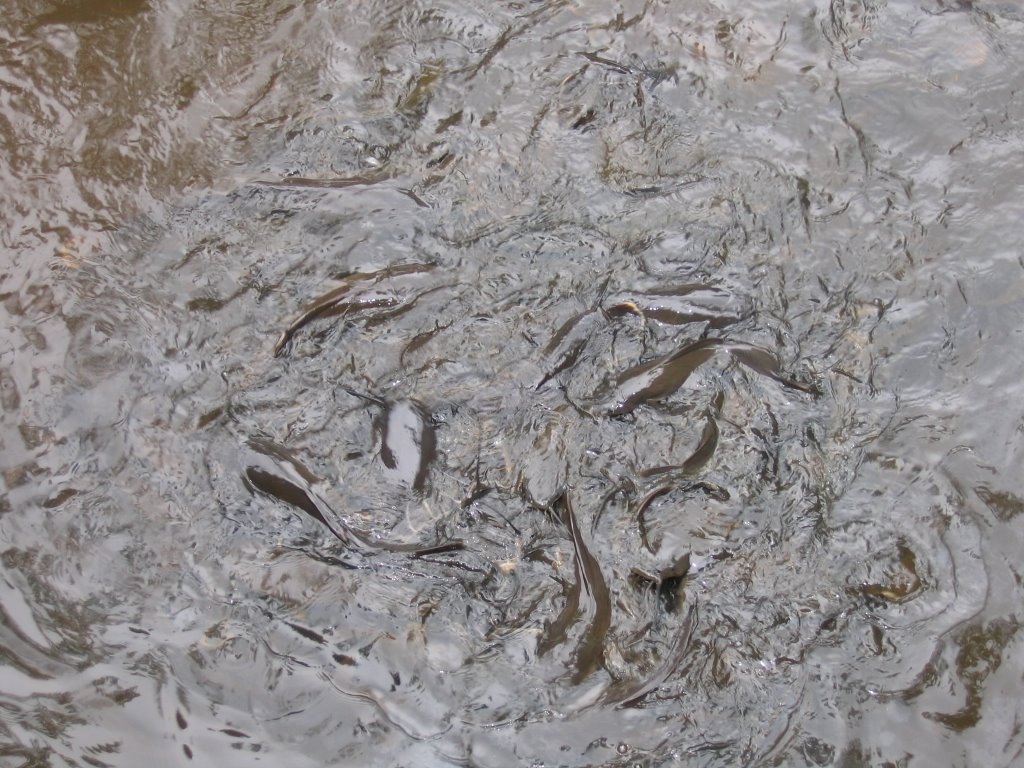 The Town Chief warned that my taking photographs of them would prove useless. “Plenty people try to take their picture,” he said, “but the pictures never come out.” With that in mind, I had an eerie feeling all the way back to Monrovia. Would my digital photos disappear? Paranoid, I kept checking on them. Would we be able to see the fish in the photos? Would my photo of the three young Gbaota girls download as two old women with missing teeth and one with long flat breasts? Would the fish gods of Gbaota let me tell their story??
(Well, here they are! Apparently the fish appreciated the Fanti bread I threw in. However, if the blog starts to act up we'll all know why.)
Gbaota Girls
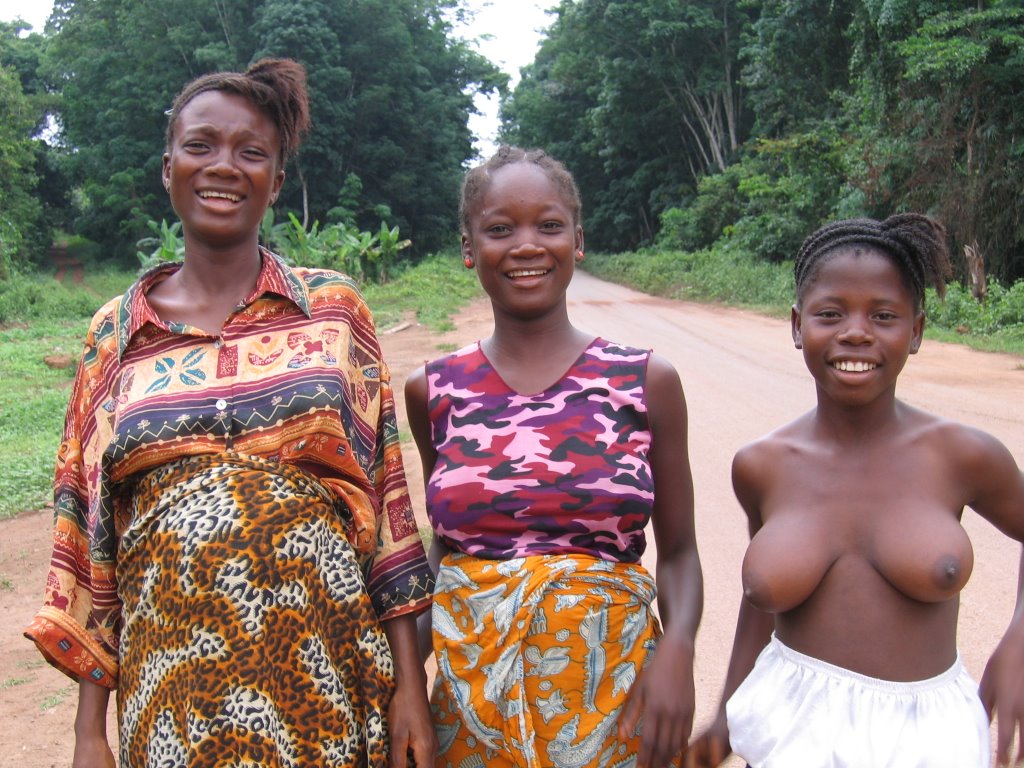
(L-R) Teta, Tutu-Girl and Annie, who pulled her tube top down and insisted on showing her titties for the picture (Gbaota Town, Bong County)
Sunday, February 19, 2006
Foya Rebel Fortresses
Foya, Lofa County
One of the most remarkable things about Foya is that years after the fighting, homes and buildings still bear the marks and warning signs of the rebel forces who terrorized the citizens there.
I asked people why they keep these reminders of such a traumatic time. Someone explained that they're waiting for the owners of the abandoned buildings to come back and fix up their places. Some of those living in marked houses said they simply don't have any paint.
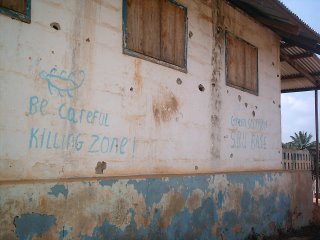
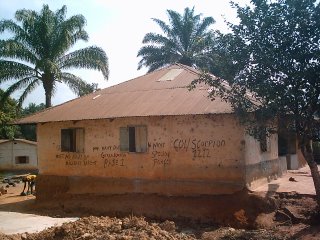

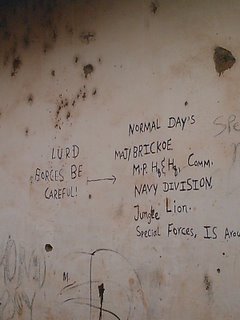
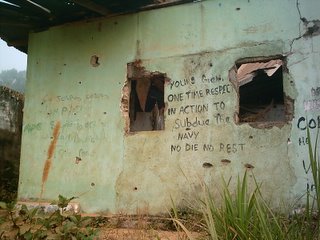
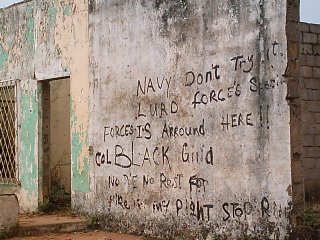
If you want to help give Foya a facelift so that the children don't grow up thinking this is normal, please contact me.
One of the most remarkable things about Foya is that years after the fighting, homes and buildings still bear the marks and warning signs of the rebel forces who terrorized the citizens there.
I asked people why they keep these reminders of such a traumatic time. Someone explained that they're waiting for the owners of the abandoned buildings to come back and fix up their places. Some of those living in marked houses said they simply don't have any paint.
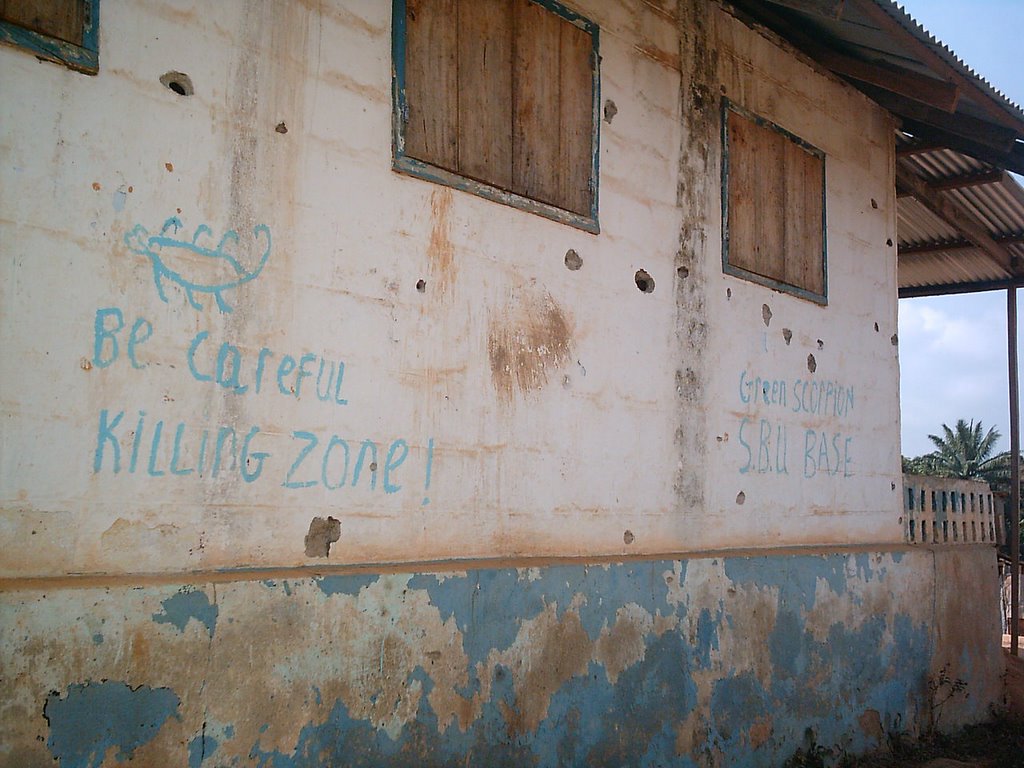

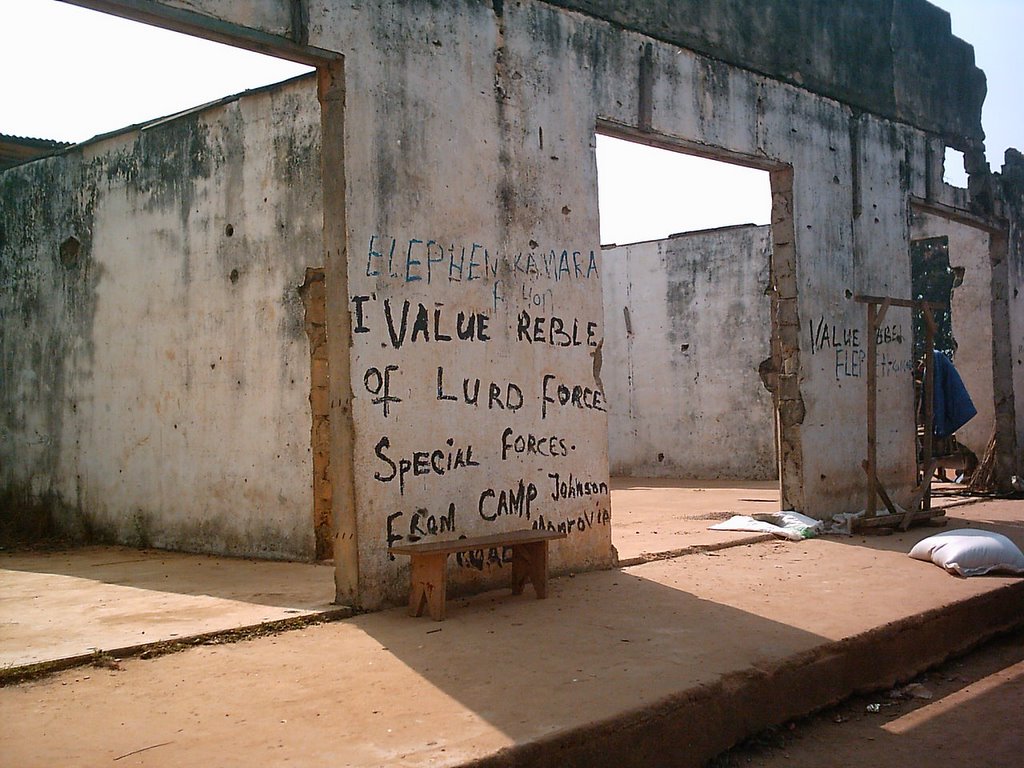

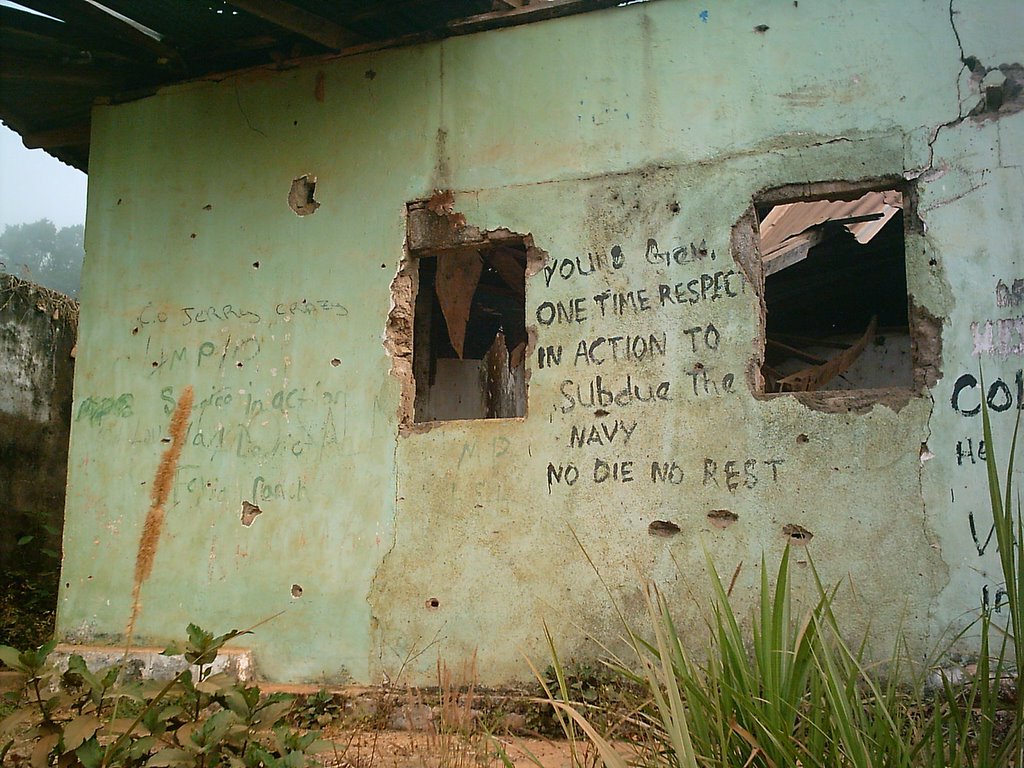

If you want to help give Foya a facelift so that the children don't grow up thinking this is normal, please contact me.
Saturday, February 18, 2006
Making Country Cloth
Foya, Lofa County
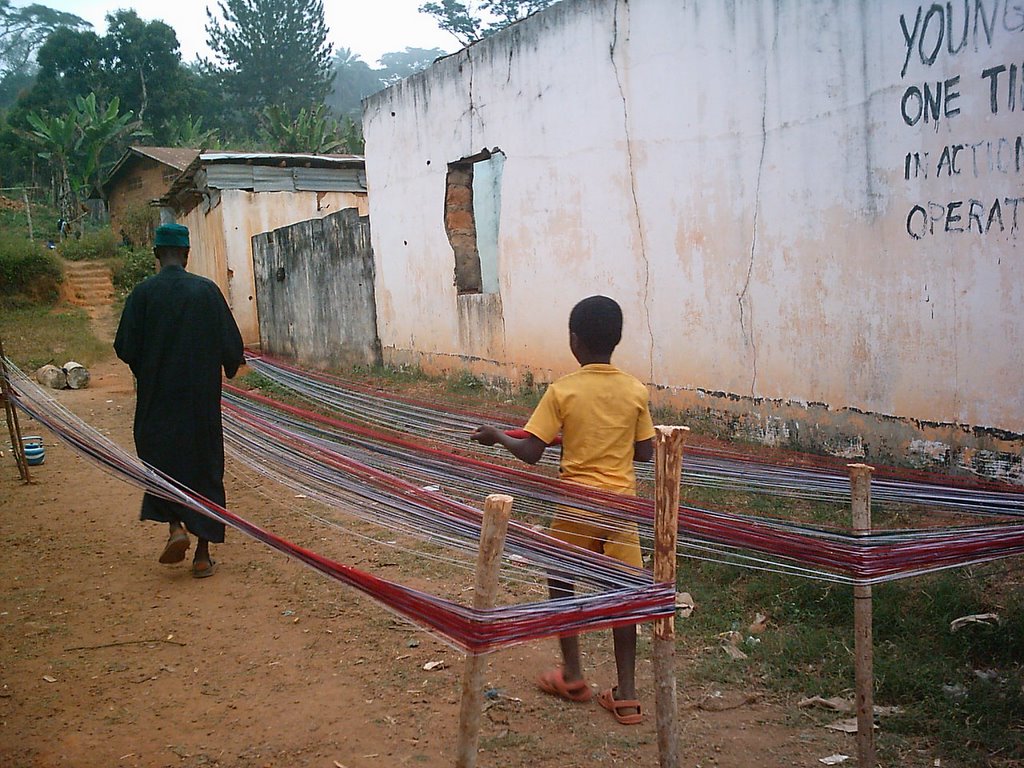
Mohammed Sheriff, Imam of Foya City, leads prayers at the mosque and teaches his son how to make country cloth -- just as his father taught him. They will weave the colorful yarn into a thick, striped cloth to be used for shirts, gowns, hats, and other items.


Mohammed Sheriff, Imam of Foya City, leads prayers at the mosque and teaches his son how to make country cloth -- just as his father taught him. They will weave the colorful yarn into a thick, striped cloth to be used for shirts, gowns, hats, and other items.


Friday, February 17, 2006
Towo Finda's Fishing Nets
Foya, Lofa County
 Towo Finda makes fishing nets with rope made from fibers found in leaves from the palm tree. You fold a long thin leaf in half, and, from the crease, peel away to expose the fine green fibers. The fibers are then twisted together into a thin rope and laid out to dry.
When fishing season rolls around, women go out in small groups and wade into the water with their nets. They gently shake the nets underwater to lure in the fish. Towo Finda says she used to fish herself, but had to stop for health reasons. For several years now, she has made nets only to sell. It takes about a week to make a good net that will last for several years.
Thursday, February 16, 2006
Wednesday, February 15, 2006
Edwin Kpongo, Brick Maker
Foya, Lofa County
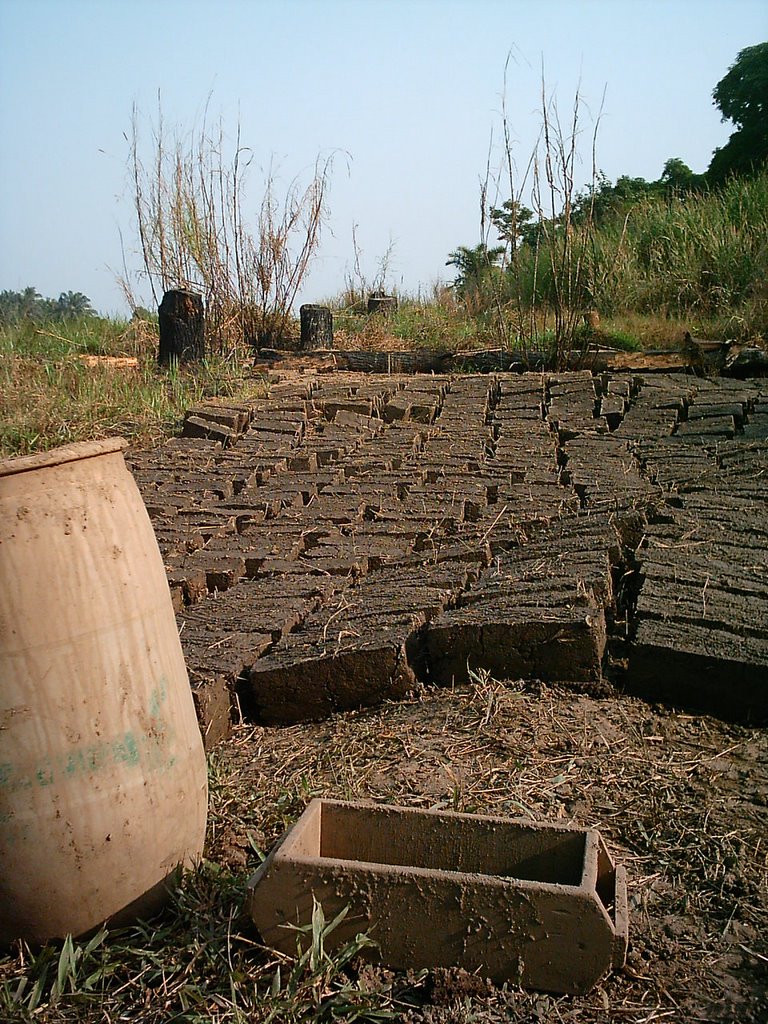
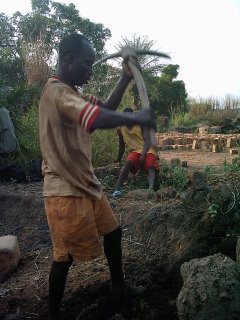 Edwin Kpongo and his friends earn a living making bricks out of mud. Each man on the team makes 200 blocks per day, and gets paid $200 Liberian Dollars for his labor. The blocks take up to 15 days to get dry. During construction they are put together with cement, and then plastered. With the plaster and a roof for protection, mud houses last for many years.
 Edwin Kpongo and his friends earn a living making bricks out of mud. Each man on the team makes 200 blocks per day, and gets paid $200 Liberian Dollars for his labor. The blocks take up to 15 days to get dry. During construction they are put together with cement, and then plastered. With the plaster and a roof for protection, mud houses last for many years.
Tuesday, February 14, 2006
Foya Market
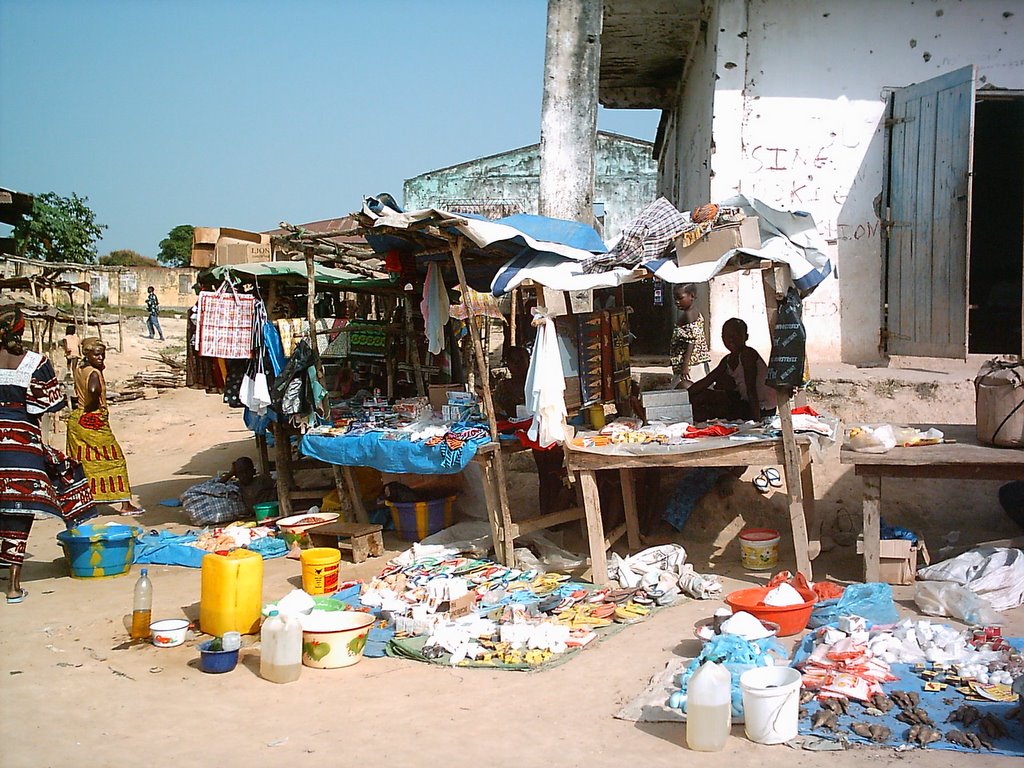 The Foya Market is situated in the middle of the town right along the dusty Kolahun Road, a.k.a. "Foya Broad Street."
Sunday, February 12, 2006
A Tribute to Mr. Marshall
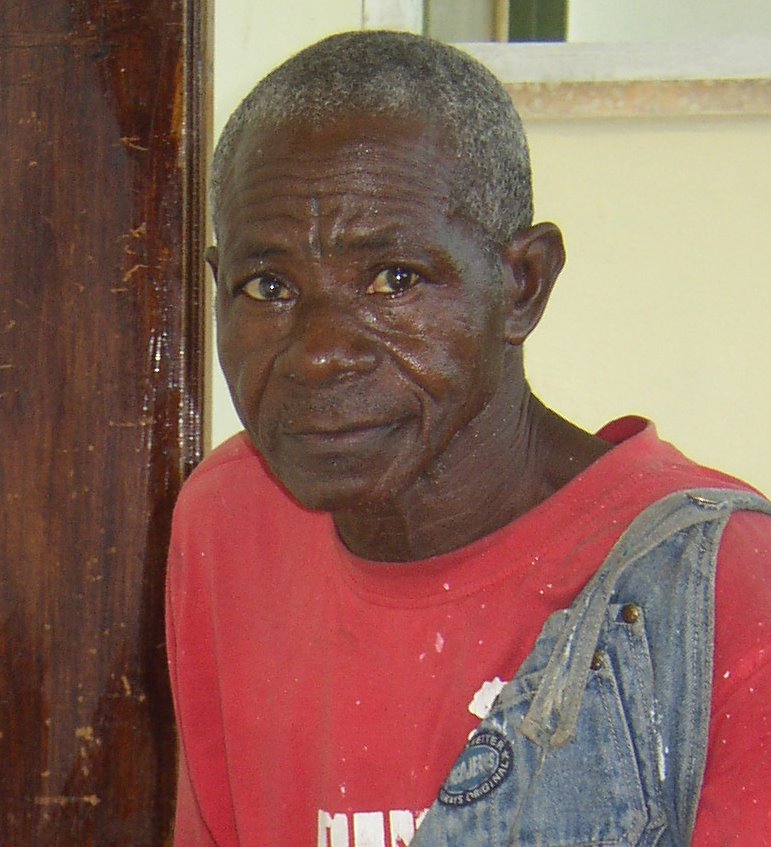 I returned from Lofa County to a house with kids' handprints everywhere and the news that Mr. Marshall, our beloved painter, died while I was away.
When we renovated the house we live in, Mr. Marshall was the only professional among a motley crew of guys who didn’t know what they were doing. The “painters” didn’t know about using masking tape or newspapers to keep paint off where it didn’t belong, they left oil paint to harden on the brushes overnight, and one of them put so much paint on the kitchen ceiling that we had little icicle-looking things forming and threatening to drip on our heads. Mr. Marshall corrected their mistakes, taught them patiently, and did his own work carefully and beautifully. “Quick impact, Mr. Marshall – you’re too slow!” my husband would say. But Mr. Marshall would just laugh and refuse to rush. Long after the main job was done, he was the one we called to do extra paint jobs and touch-ups here and there.
 I loved and respected Mr. Marshall not just as a painter, but as a friend. I liked listening to his stories about painting the Executive Mansion and Tupee Taylor’s house, and I enjoyed watching him interact with my two little boys.
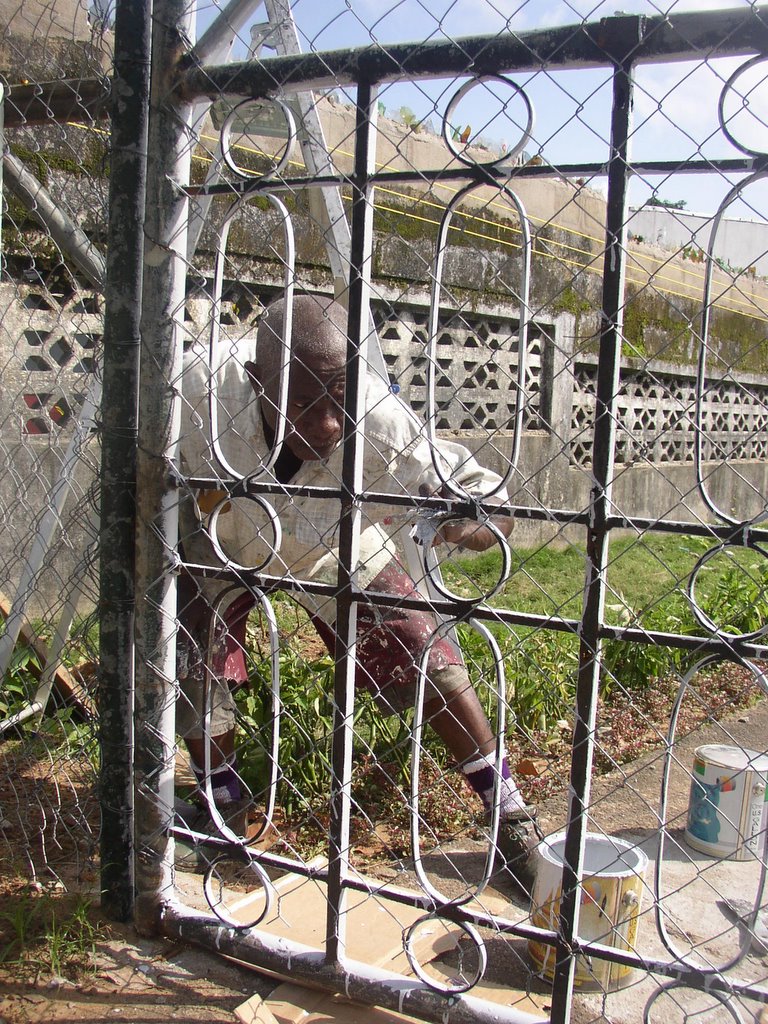 We miss him dearly, but perhaps the Gates of Heaven needed a new coat of paint and Mr. Marshall, at 70, needed a rest. I, for now, will live with my walls the way they are because I cannot imagine having someone else paint them for me.
Friday, January 20, 2006
Away Again
Heading to Lofa County (Foya and Voinjama) for two weeks!
While I'm gone, catch up with my archives and go to www.liberiaseabreeze.com for great articles, stories, poems, essays, and photographs by Liberian writers & artists.
Enjoy!
While I'm gone, catch up with my archives and go to www.liberiaseabreeze.com for great articles, stories, poems, essays, and photographs by Liberian writers & artists.
Enjoy!
Monday, January 16, 2006
My Own Little "Ovation"
For those of you who don't know, Ovation is an African society magazine that covers people and events across the continent and in the Diaspora. The glossy magazine is known for its posed pictures of movers & shakers with their fans and guests. These pictures were taken at the Red Carpet Charity Ball at Krystal Oceanview Hotel in honor of Her Excellency, President Ellen Johnson Sirleaf (oh, I just love saying that!)
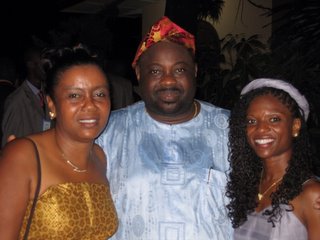
Marcia Shaw of Image Africa, Chief Dele Momodu, Publisher of Ovation, and media & PR consultant Elma Shaw

Her Excellency, President Ellen Johnson Sirleaf
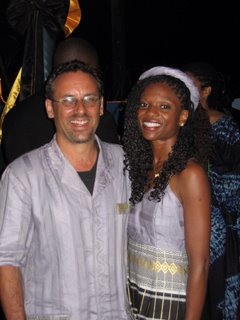
Shaun Skelton, Director of Visions in Action, and Elma Shaw

Comfort Peabody and City Mayor Ophelia Hoff Saytumah

Jemima Baker and Denise Tubman
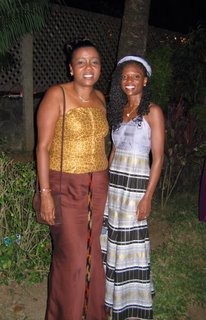
Marcia and Elma Shaw

Annie and Seward Cooper with Dawn and Nat Barnes

Marcia Shaw of Image Africa, Chief Dele Momodu, Publisher of Ovation, and media & PR consultant Elma Shaw

Her Excellency, President Ellen Johnson Sirleaf
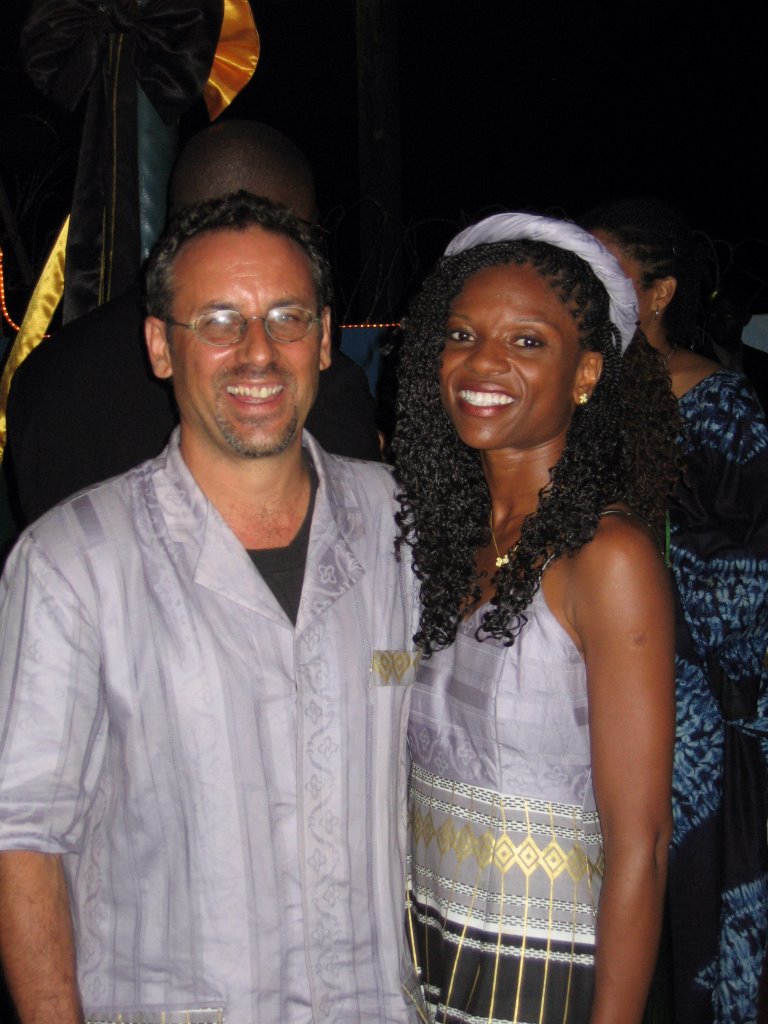
Shaun Skelton, Director of Visions in Action, and Elma Shaw
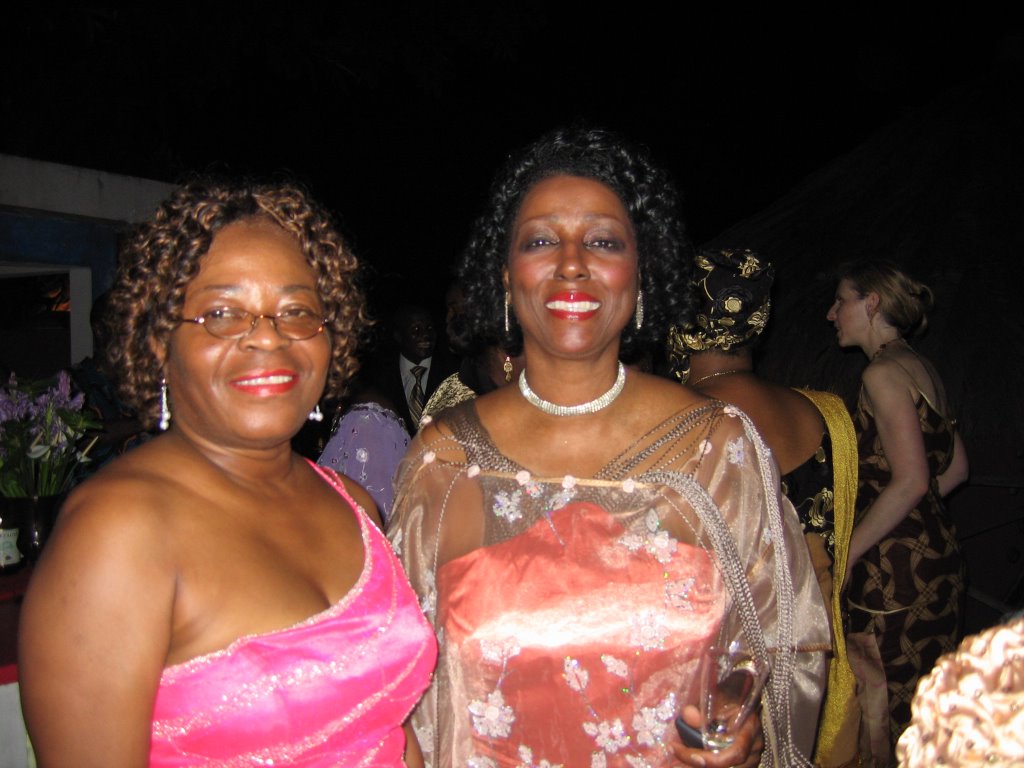
Comfort Peabody and City Mayor Ophelia Hoff Saytumah
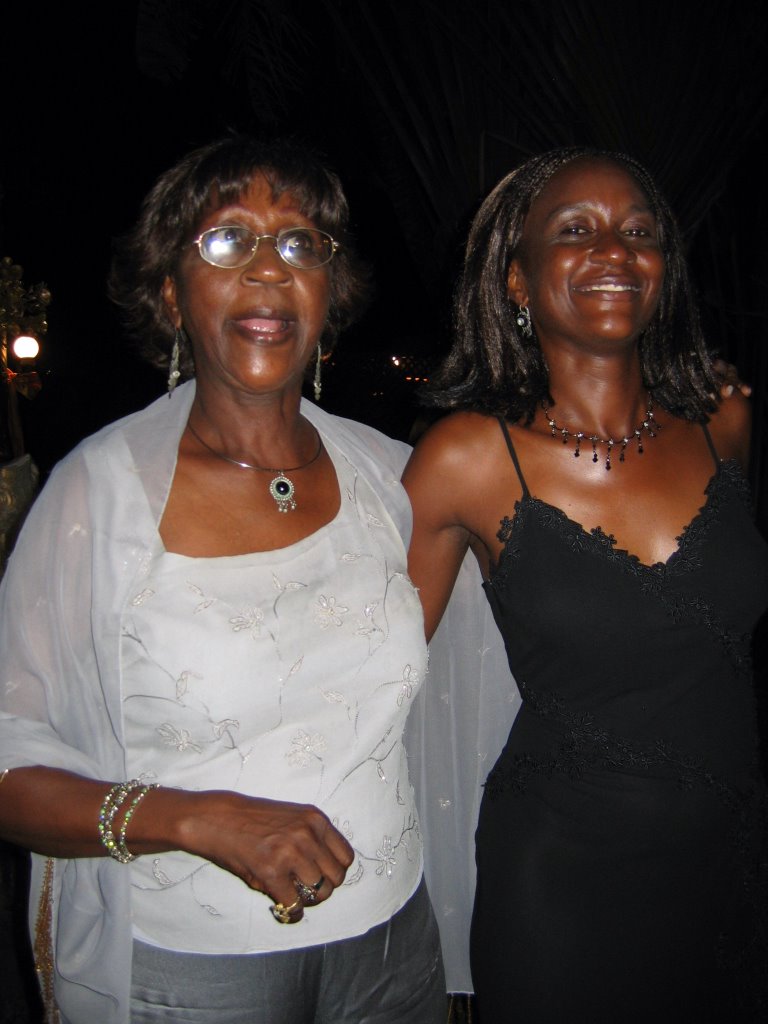
Jemima Baker and Denise Tubman

Marcia and Elma Shaw
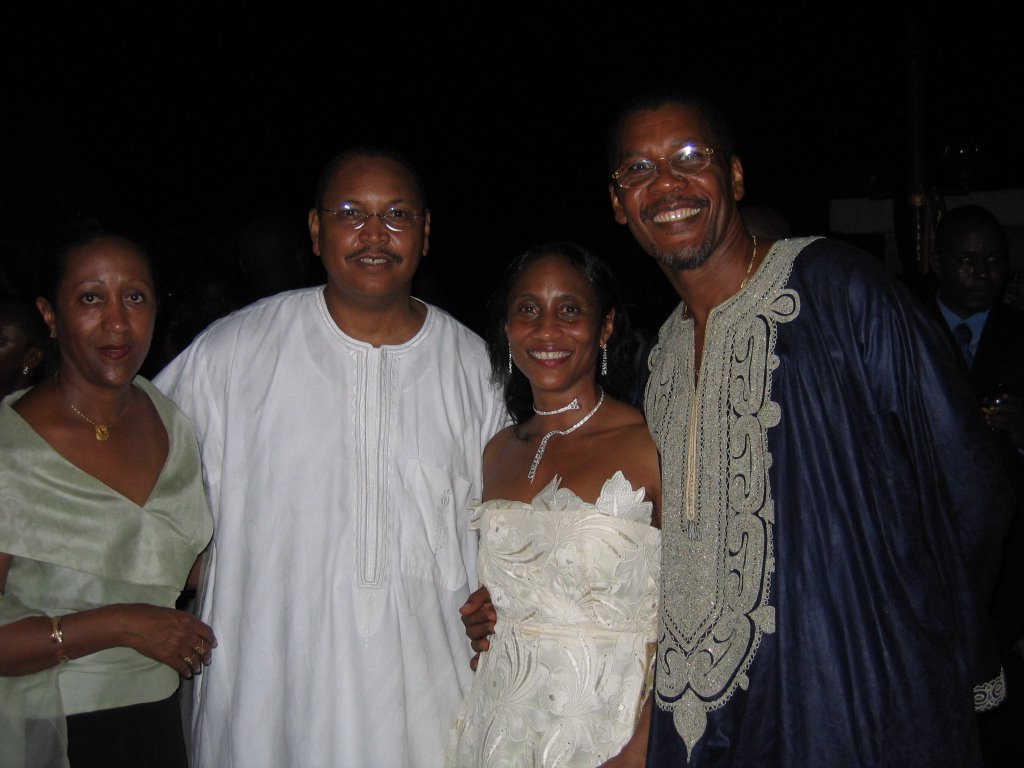
Annie and Seward Cooper with Dawn and Nat Barnes
Inauguration Day


The view from where we sat on the grounds of the Capitol Building. Those are security people on the dome -- not pigeons (-:
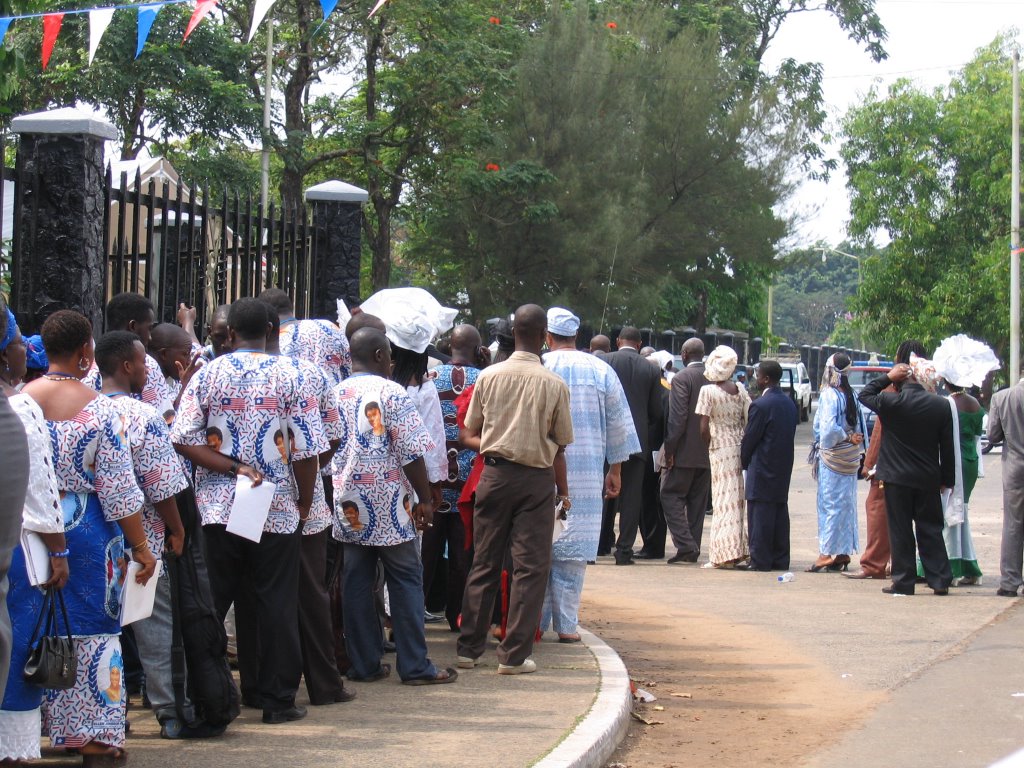
Heading to the Executive Mansion for a reception on the South Lawn
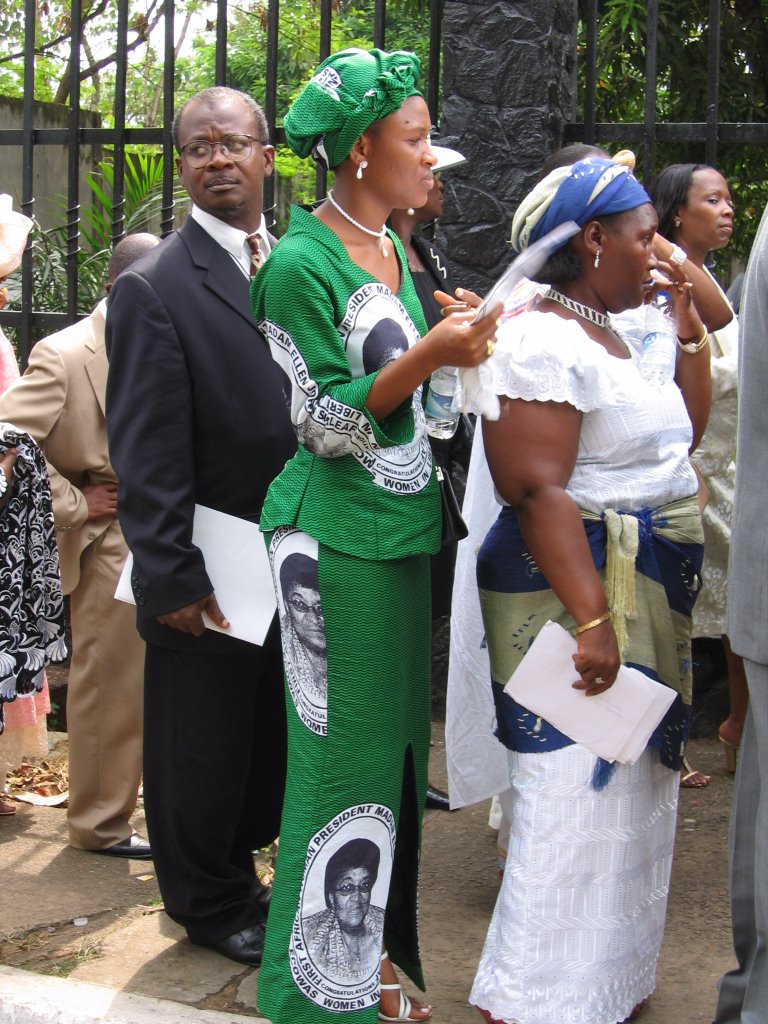
Many people wore "Ellen lappas"
Thursday, January 05, 2006
Chris Brownell, Wood Carver
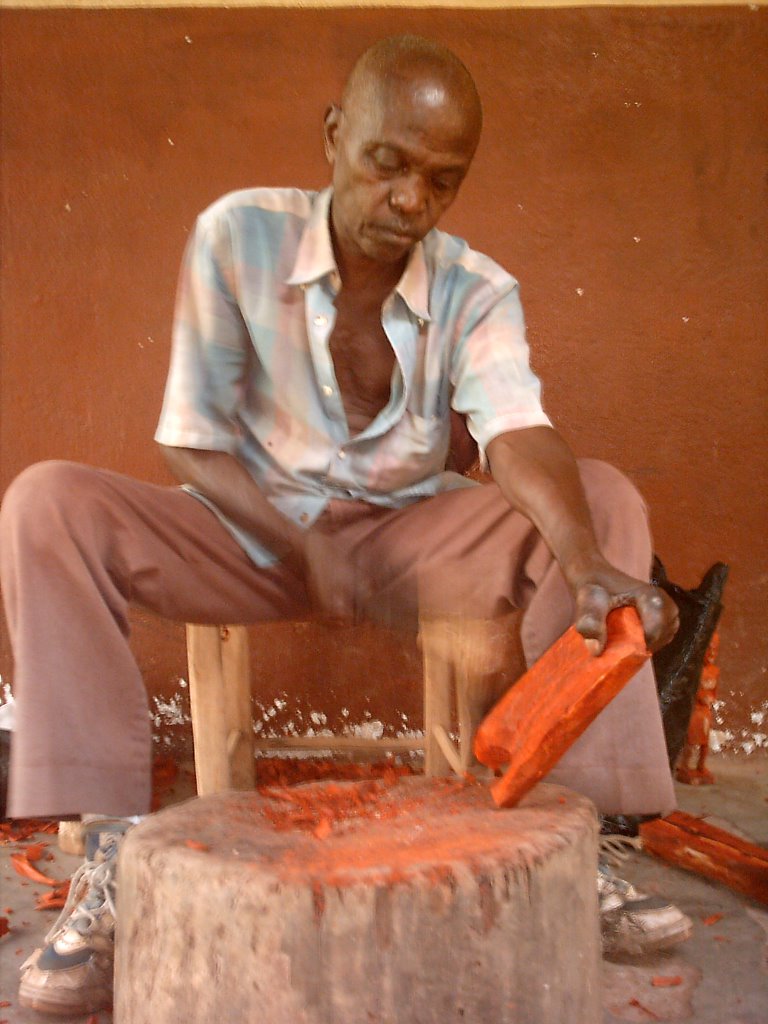 -Ganta, Nimba County
Chris Brownell has lived at the Grace United Methodist Rehab Center since 1973 when his family sent him here after he contracted leprosy. At the time, he says, his family could not deal with the stigma surrounding the disease. The Rehab Center offers medical care and vocational training for people with challenging conditions. Trades include mat-making and carpentry. Mr. Brownell is a wood carver—an excellent one, despite the loss of all his fingers. He makes decorative wall pieces out of camwood—a heavy, sienna-colored wood found here in Liberia’s forests. He is making “a woman kneeling down” now, and says it will take him about five days to carve the piece. His workbench is a tree stump, and he uses a spear to shape the wood. The spear is a tool that resembles a crowbar but is razor sharp at the tip. Five days at several hours a day, and he will charge US$15 for the piece. Some of the carvings are sold to visitors who come to the Center, and some of them are sent to Monrovia where we—having no clue and no concern about the amount of work the laborer put in—often bargain the price down as low as we can go.
Subscribe to:
Posts (Atom)