Thursday, March 23, 2006

The Fish Gods of Gbaota

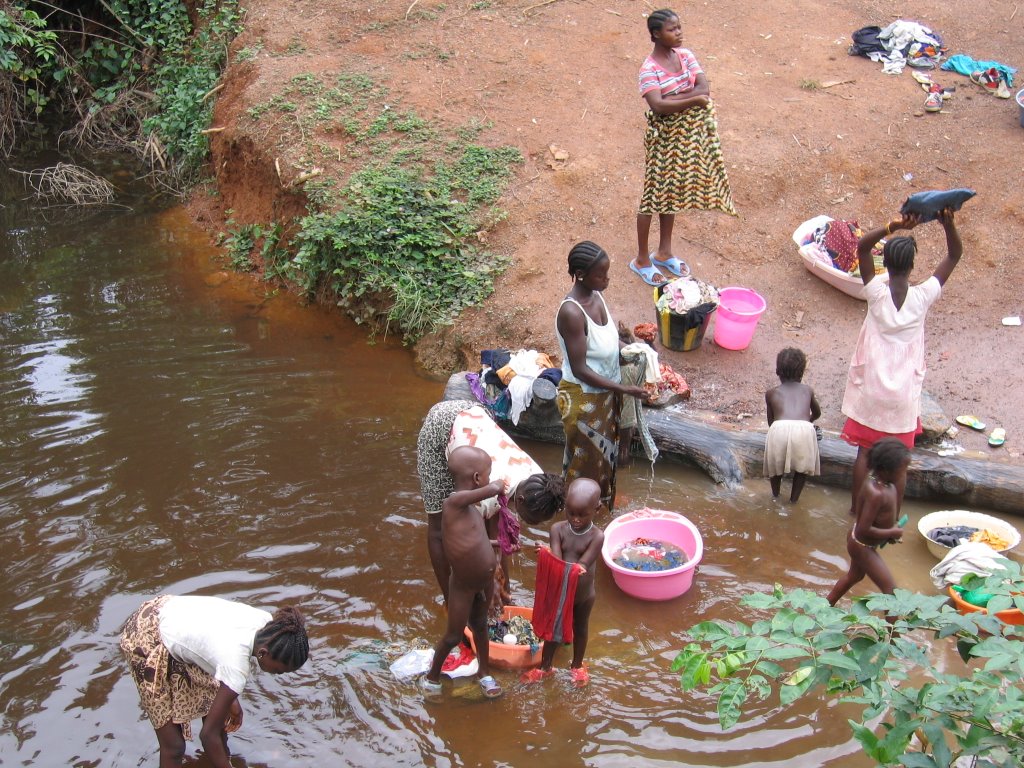
Almost three hours out of Monrovia, on the highway to Gbarnga, there is a little town with an infamous river running through it. One part of the river is used for bathing and washing clothes, and another part is full of giant catfish that have lived there unmolested since the olden days. They come to the surface in a wild thrashing frenzy if you throw pieces of bread in the water. During the civil war, I am told, when there was no food and people were so hungry that they ate rats, lizards, and even other human beings, no one even considered catching the fish of Gbaota.

Legend has it that long ago, before the war, people used to bring their problems to the fish. After such visits, which were made in consultation with certain gifted people from the town, all sorts of requests would be granted. Even women who went there with infertility problems would finally bear children. But anyone who dared to eat the fish would fall into misfortune and ill health, and die.

Town Chief Harrison Cooper says once a group of people began fishing there, claiming that as Christians, no harm would come to them if they ate the fish. “They saw for themselves,” Cooper added with a shrug, “and they stopped eating the fish."

There are other tales regarding the fish of Gbaota River. For one, they say any other fish that enters their space turns up dead, and that any Gbaota catfish who crosses a certain boundary in the river cannot turn back; it loses its power and becomes safe to eat.
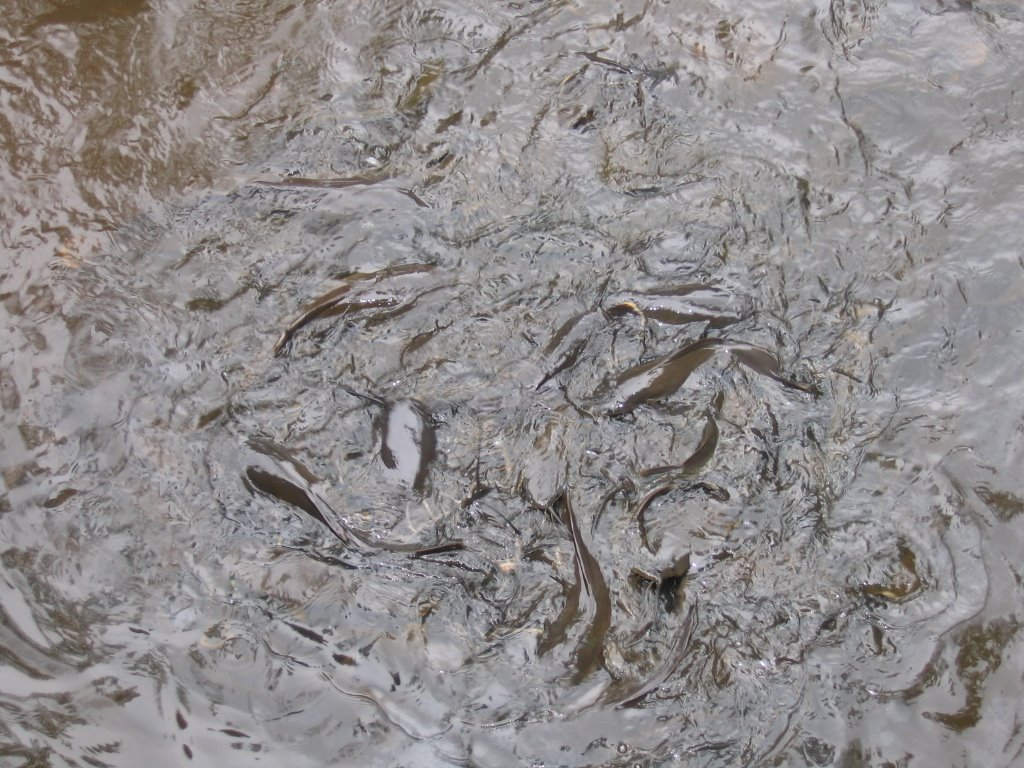
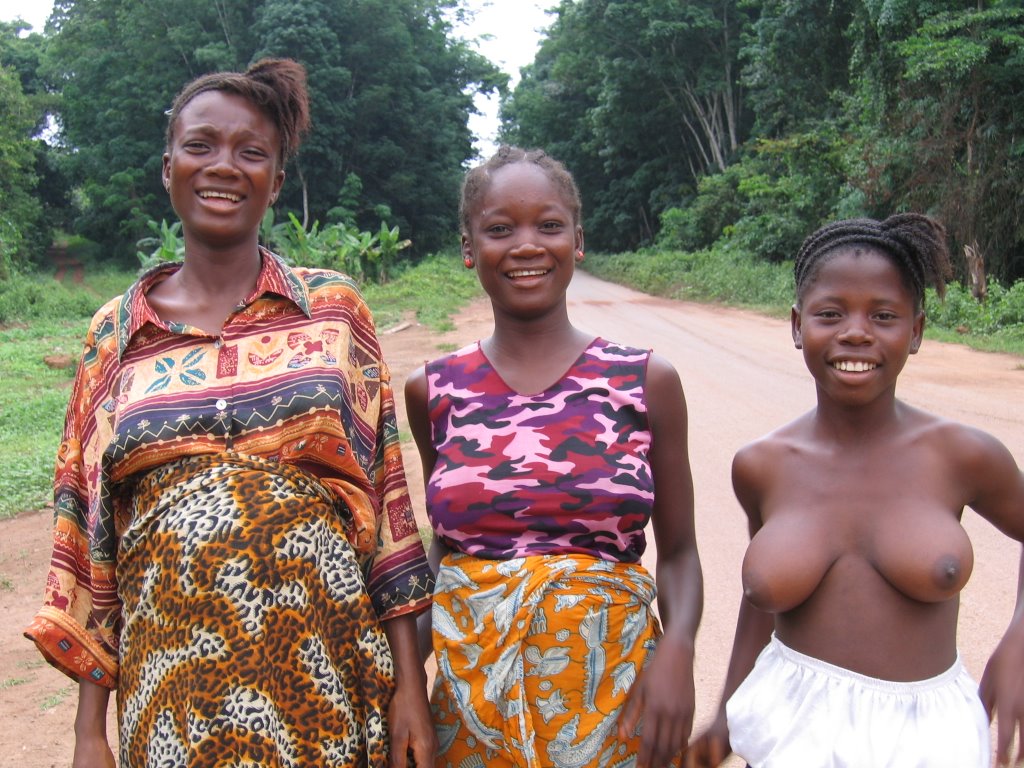
The Town Chief warned that my taking photographs of them would prove useless. “Plenty people try to take their picture,” he said, “but the pictures never come out.” With that in mind, I had an eerie feeling all the way back to Monrovia. Would my digital photos disappear? Paranoid, I kept checking on them. Would we be able to see the fish in the photos? Would my photo of the three young Gbaota girls download as two old women with missing teeth and one with long flat breasts? Would the fish gods of Gbaota let me tell their story??

(Well, here they are! Apparently the fish appreciated the Fanti bread I threw in. However, if the blog starts to act up we'll all know why.)

Gbaota Girls


(L-R) Teta, Tutu-Girl and Annie, who pulled her tube top down and insisted on showing her titties for the picture (Gbaota Town, Bong County)

Sunday, February 19, 2006

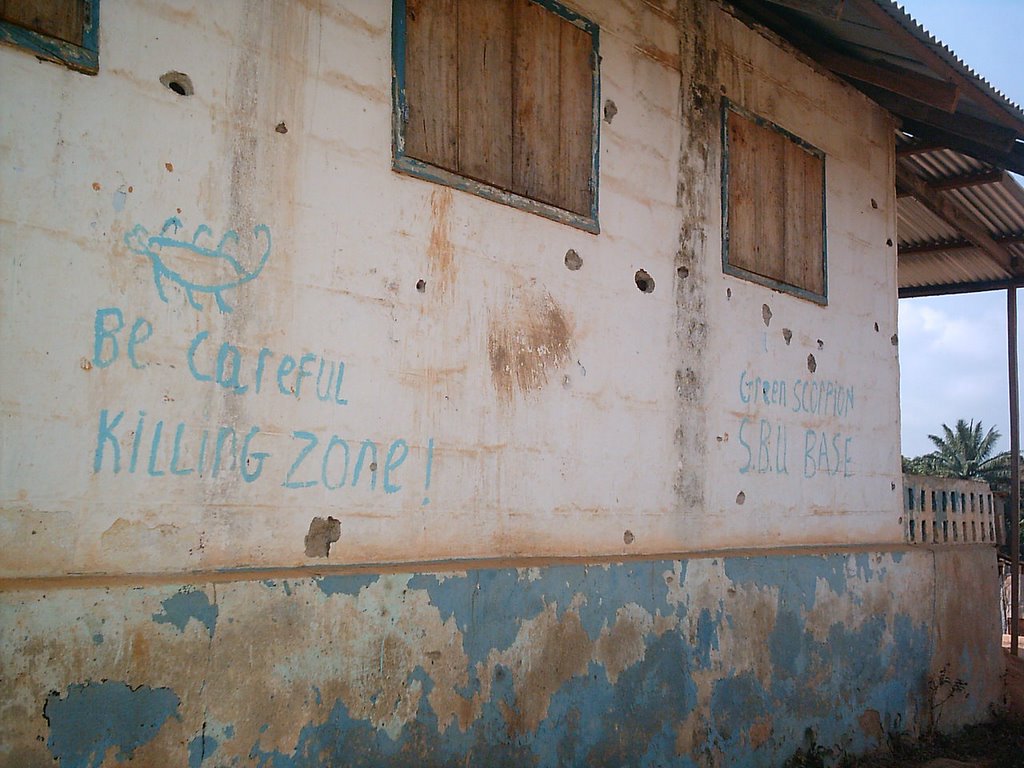
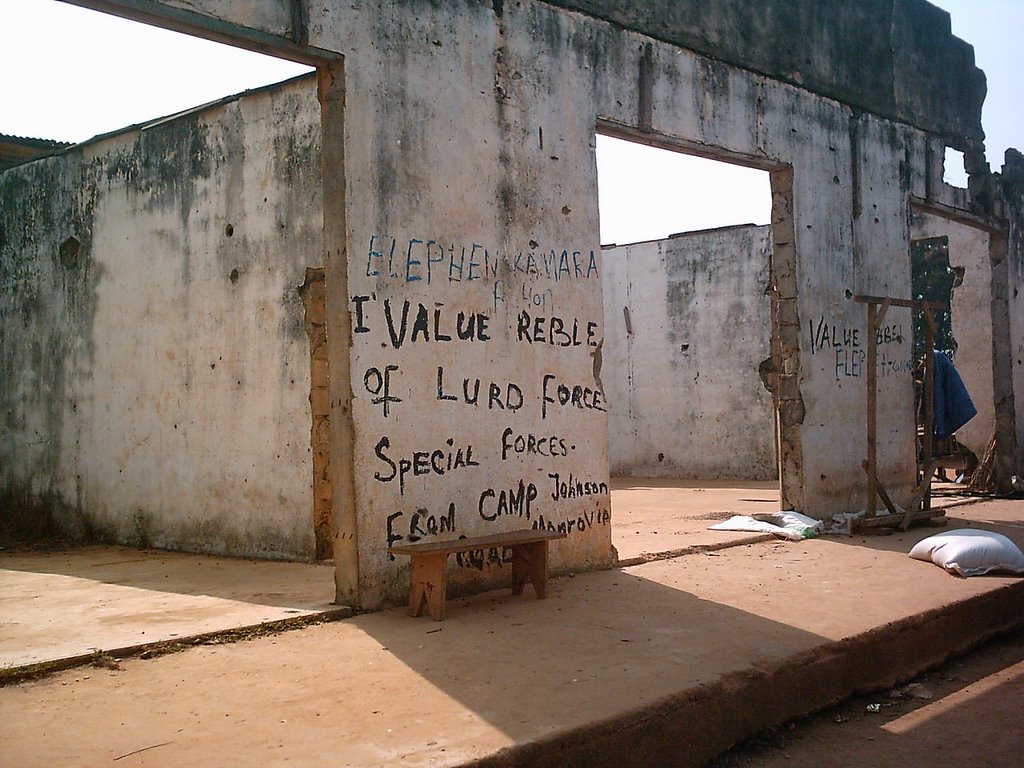
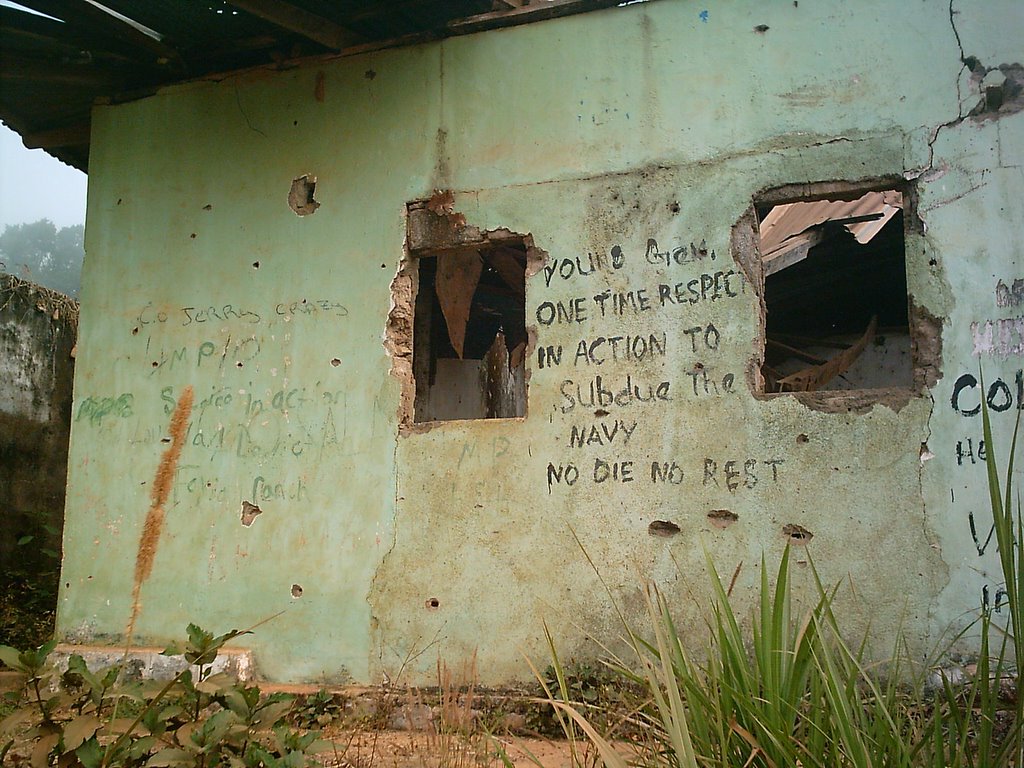
Foya Rebel Fortresses

Foya, Lofa County

One of the most remarkable things about Foya is that years after the fighting, homes and buildings still bear the marks and warning signs of the rebel forces who terrorized the citizens there.

I asked people why they keep these reminders of such a traumatic time. Someone explained that they're waiting for the owners of the abandoned buildings to come back and fix up their places. Some of those living in marked houses said they simply don't have any paint.


If you want to help give Foya a facelift so that the children don't grow up thinking this is normal, please contact me.

Saturday, February 18, 2006

Making Country Cloth

Foya, Lofa County

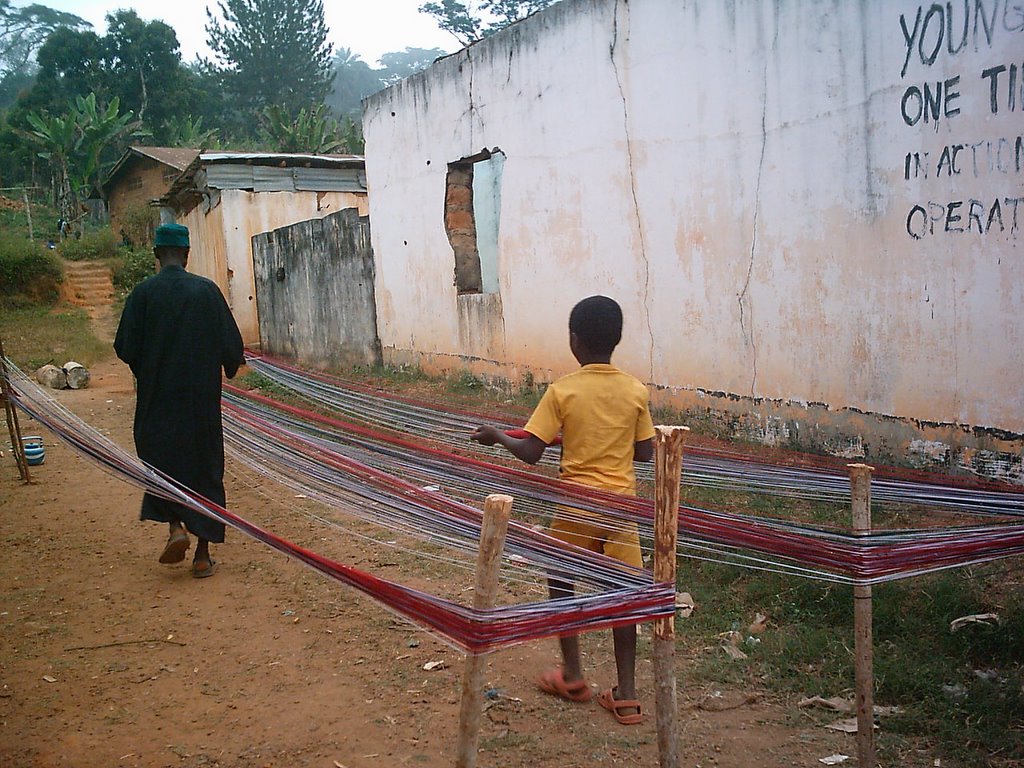
Mohammed Sheriff, Imam of Foya City, leads prayers at the mosque and teaches his son how to make country cloth -- just as his father taught him. They will weave the colorful yarn into a thick, striped cloth to be used for shirts, gowns, hats, and other items.


Friday, February 17, 2006

Towo Finda's Fishing Nets

Foya, Lofa County
Towo Finda makes fishing nets with rope made from fibers found in leaves from the palm tree. You fold a long thin leaf in half, and, from the crease, peel away to expose the fine green fibers. The fibers are then twisted together into a thin rope and laid out to dry.

When fishing season rolls around, women go out in small groups and wade into the water with their nets. They gently shake the nets underwater to lure in the fish. Towo Finda says she used to fish herself, but had to stop for health reasons. For several years now, she has made nets only to sell. It takes about a week to make a good net that will last for several years.

Thursday, February 16, 2006

Lunch!

Foya, Lofa County
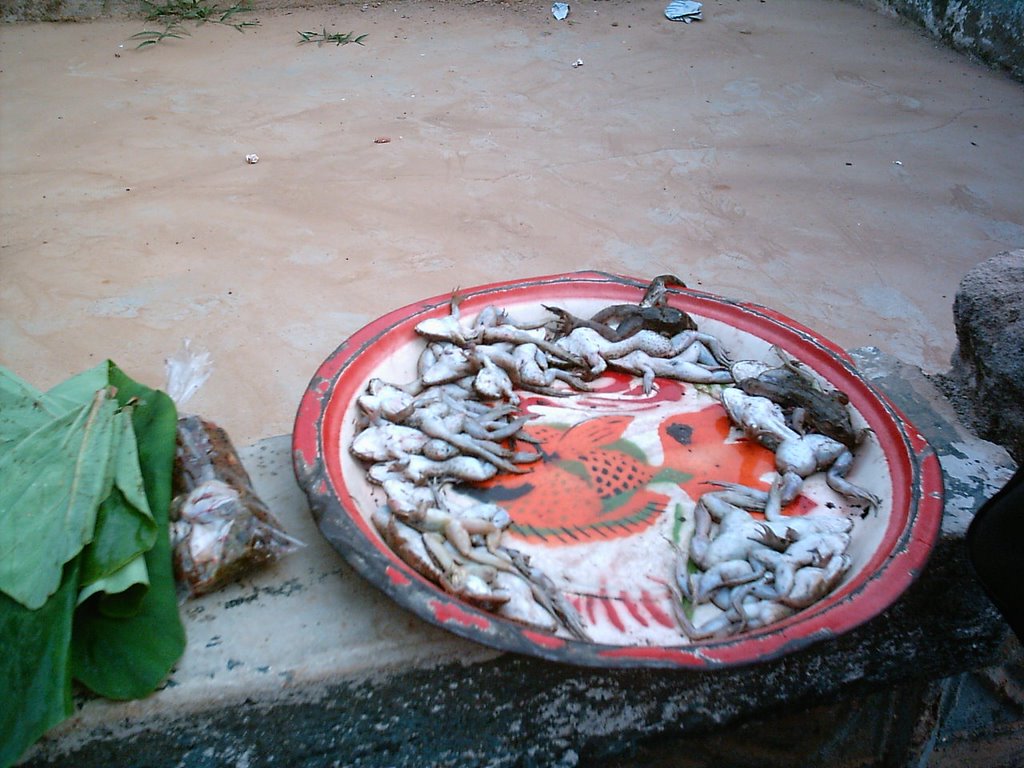
Frogs - only $10 LD for a pile

Wednesday, February 15, 2006

Edwin Kpongo, Brick Maker

Foya, Lofa County
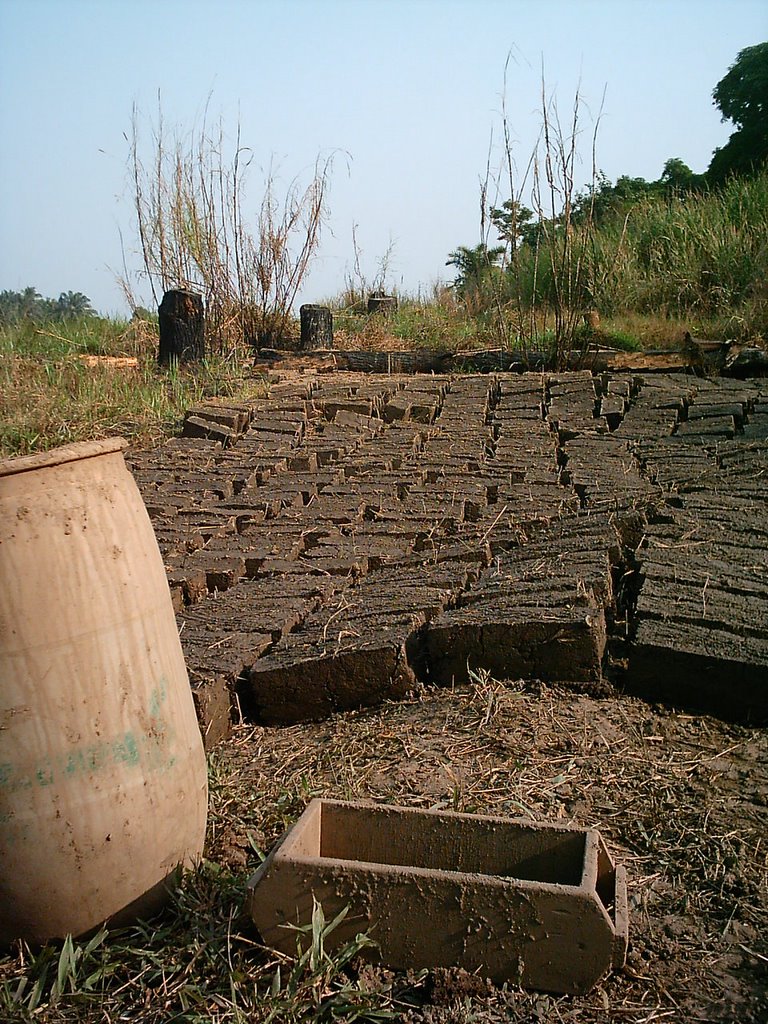
Edwin Kpongo and his friends earn a living making bricks out of mud. Each man on the team makes 200 blocks per day, and gets paid $200 Liberian Dollars for his labor. The blocks take up to 15 days to get dry. During construction they are put together with cement, and then plastered. With the plaster and a roof for protection, mud houses last for many years.

Bricks in the Sun

Foya, Lofa County

Mud bricks laid out to dry in the sun.

Tuesday, February 14, 2006

Foya Market

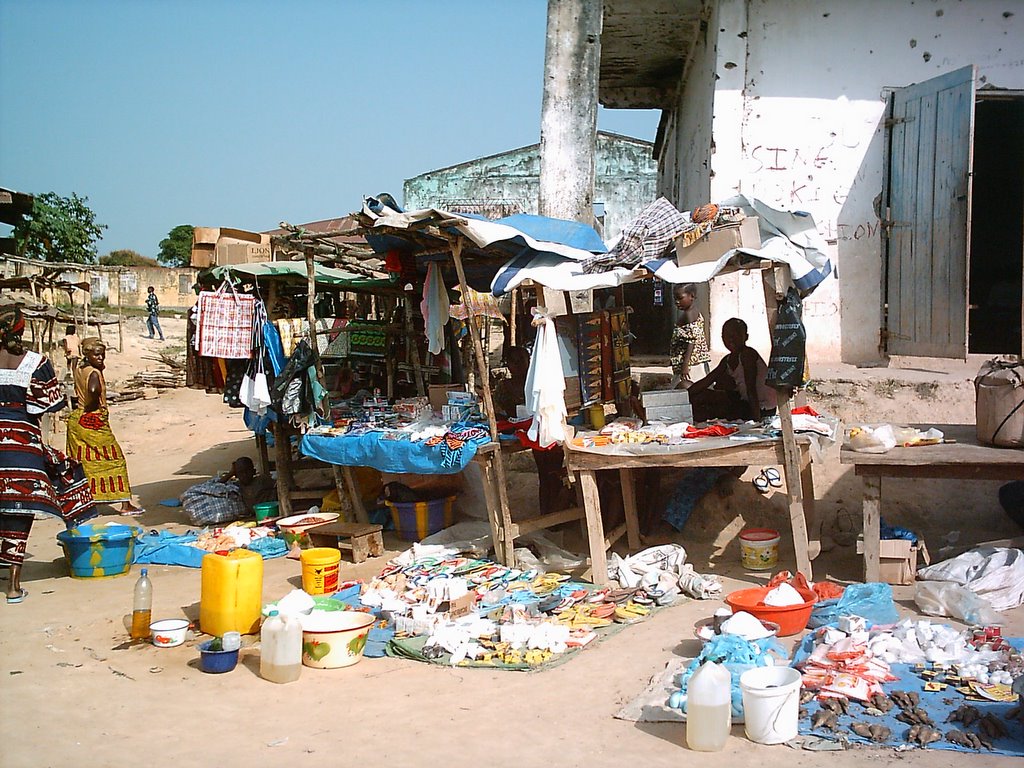
The Foya Market is situated in the middle of the town right along the dusty Kolahun Road, a.k.a. "Foya Broad Street."

Sunday, February 12, 2006

A Tribute to Mr. Marshall

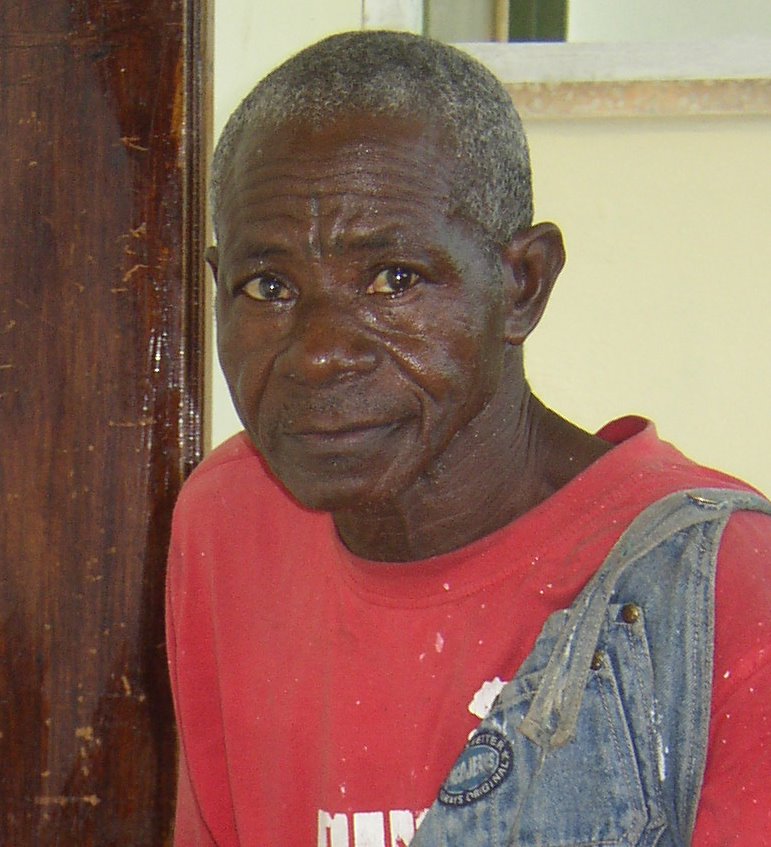
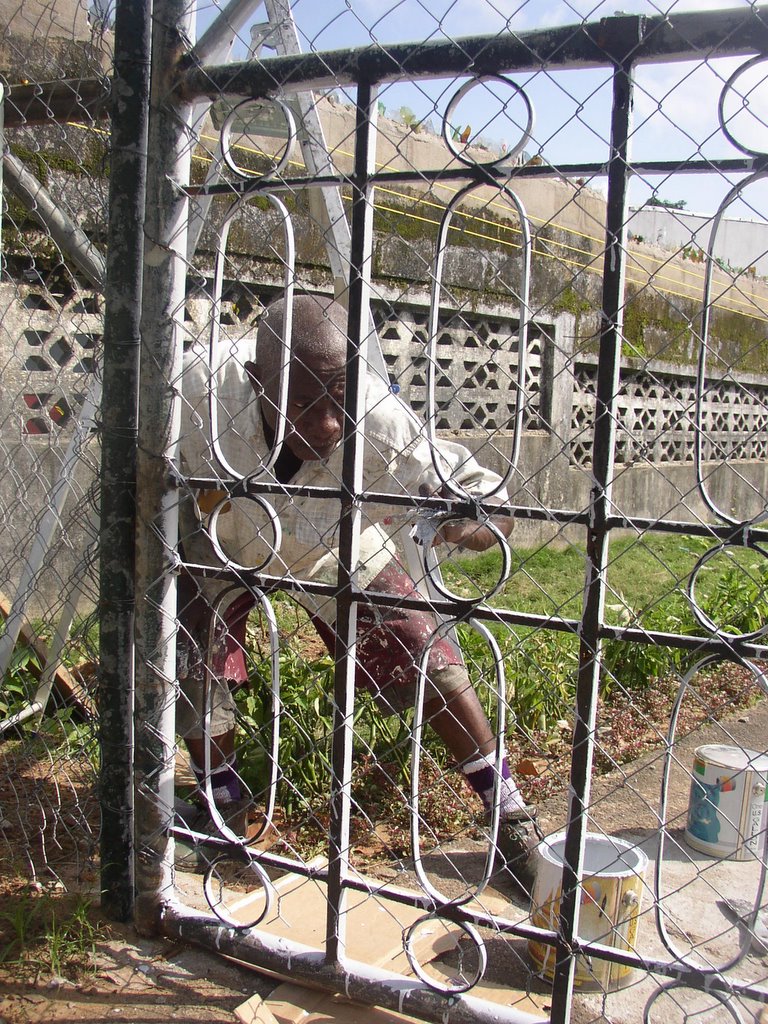
I returned from Lofa County to a house with kids' handprints everywhere and the news that Mr. Marshall, our beloved painter, died while I was away.

When we renovated the house we live in, Mr. Marshall was the only professional among a motley crew of guys who didn’t know what they were doing. The “painters” didn’t know about using masking tape or newspapers to keep paint off where it didn’t belong, they left oil paint to harden on the brushes overnight, and one of them put so much paint on the kitchen ceiling that we had little icicle-looking things forming and threatening to drip on our heads. Mr. Marshall corrected their mistakes, taught them patiently, and did his own work carefully and beautifully. “Quick impact, Mr. Marshall – you’re too slow!” my husband would say. But Mr. Marshall would just laugh and refuse to rush. Long after the main job was done, he was the one we called to do extra paint jobs and touch-ups here and there.
I loved and respected Mr. Marshall not just as a painter, but as a friend. I liked listening to his stories about painting the Executive Mansion and Tupee Taylor’s house, and I enjoyed watching him interact with my two little boys.

We miss him dearly, but perhaps the Gates of Heaven needed a new coat of paint and Mr. Marshall, at 70, needed a rest. I, for now, will live with my walls the way they are because I cannot imagine having someone else paint them for me.

Friday, January 20, 2006

Away Again

Heading to Lofa County (Foya and Voinjama) for two weeks!

While I'm gone, catch up with my archives and go to www.liberiaseabreeze.com for great articles, stories, poems, essays, and photographs by Liberian writers & artists.

Enjoy!

Monday, January 16, 2006

My Own Little "Ovation"

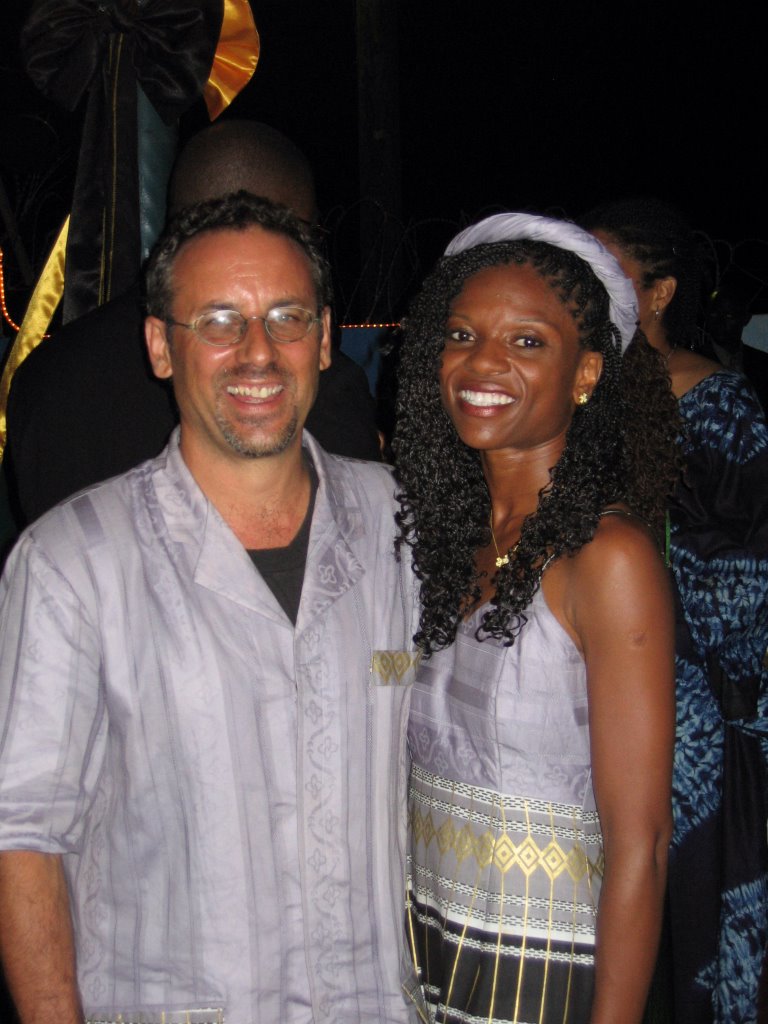
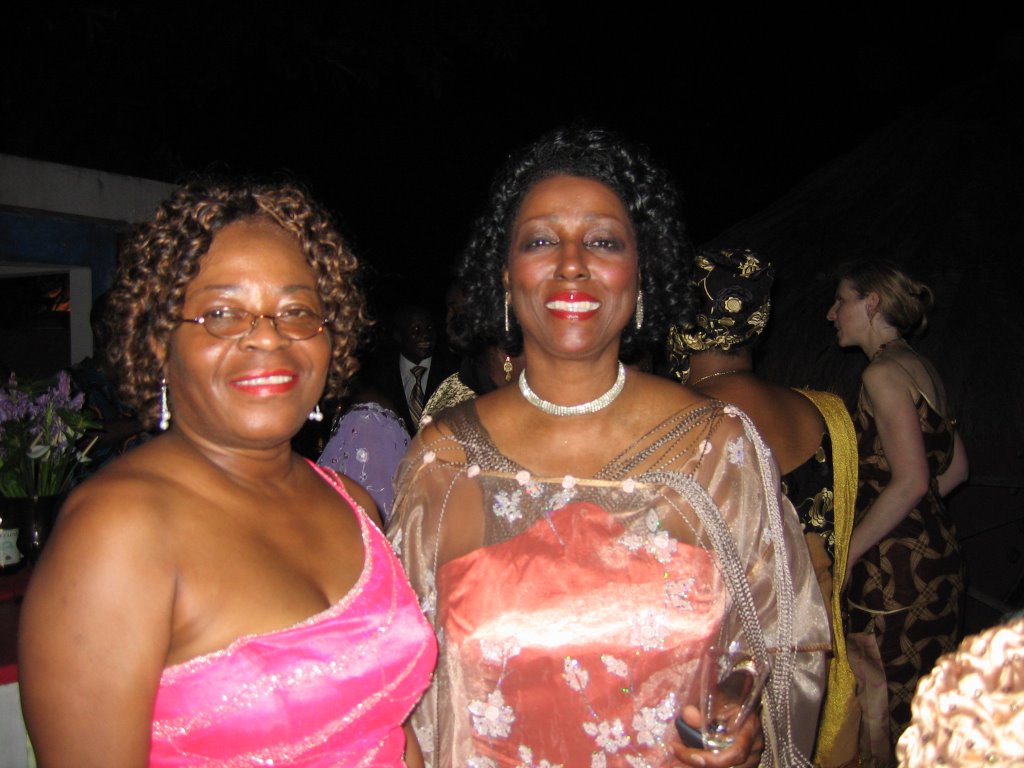
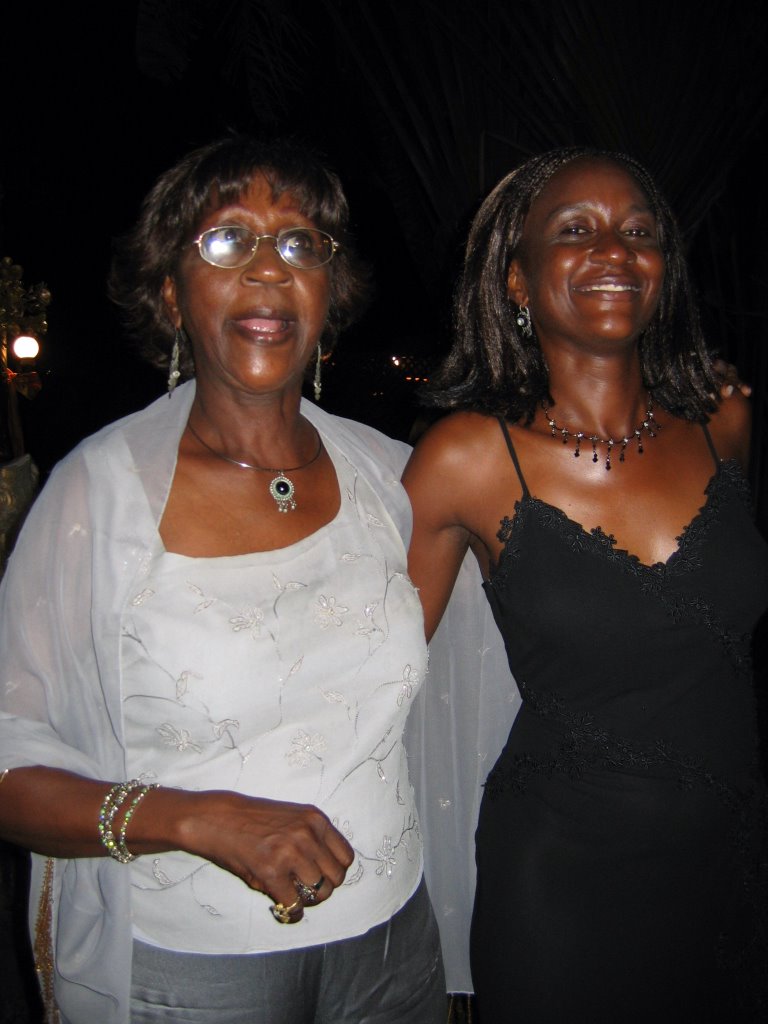
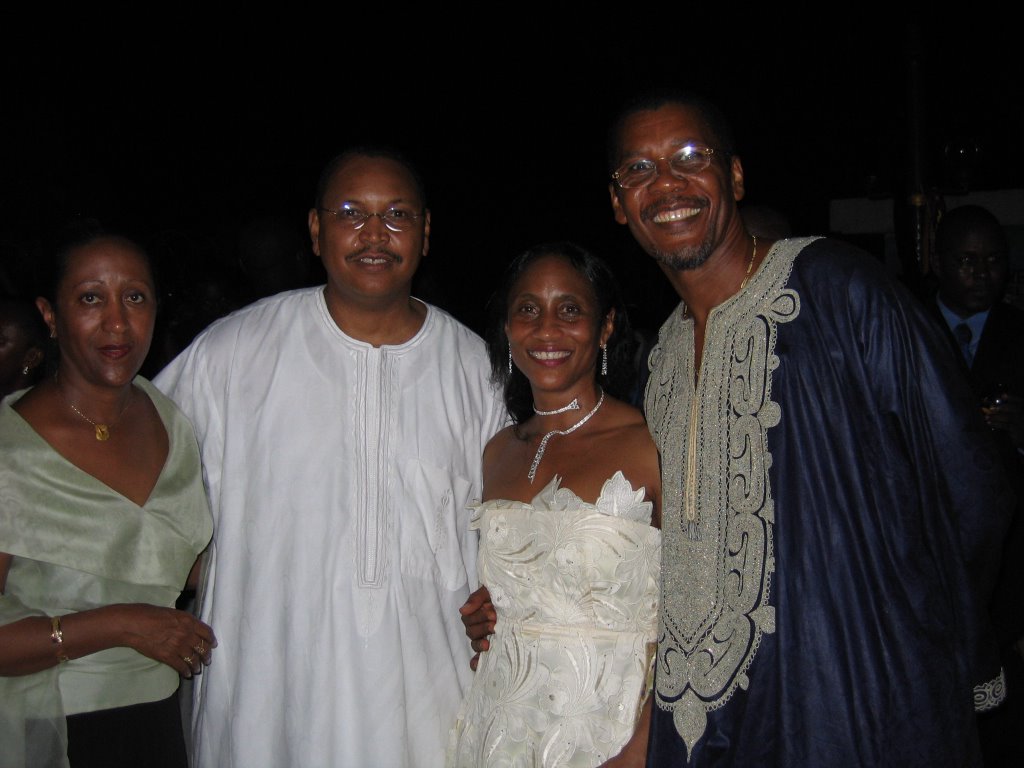
For those of you who don't know, Ovation is an African society magazine that covers people and events across the continent and in the Diaspora. The glossy magazine is known for its posed pictures of movers & shakers with their fans and guests. These pictures were taken at the Red Carpet Charity Ball at Krystal Oceanview Hotel in honor of Her Excellency, President Ellen Johnson Sirleaf (oh, I just love saying that!)


Marcia Shaw of Image Africa, Chief Dele Momodu, Publisher of Ovation, and media & PR consultant Elma Shaw


Her Excellency, President Ellen Johnson Sirleaf


Shaun Skelton, Director of Visions in Action, and Elma Shaw


Comfort Peabody and City Mayor Ophelia Hoff Saytumah


Jemima Baker and Denise Tubman


Marcia and Elma Shaw


Annie and Seward Cooper with Dawn and Nat Barnes

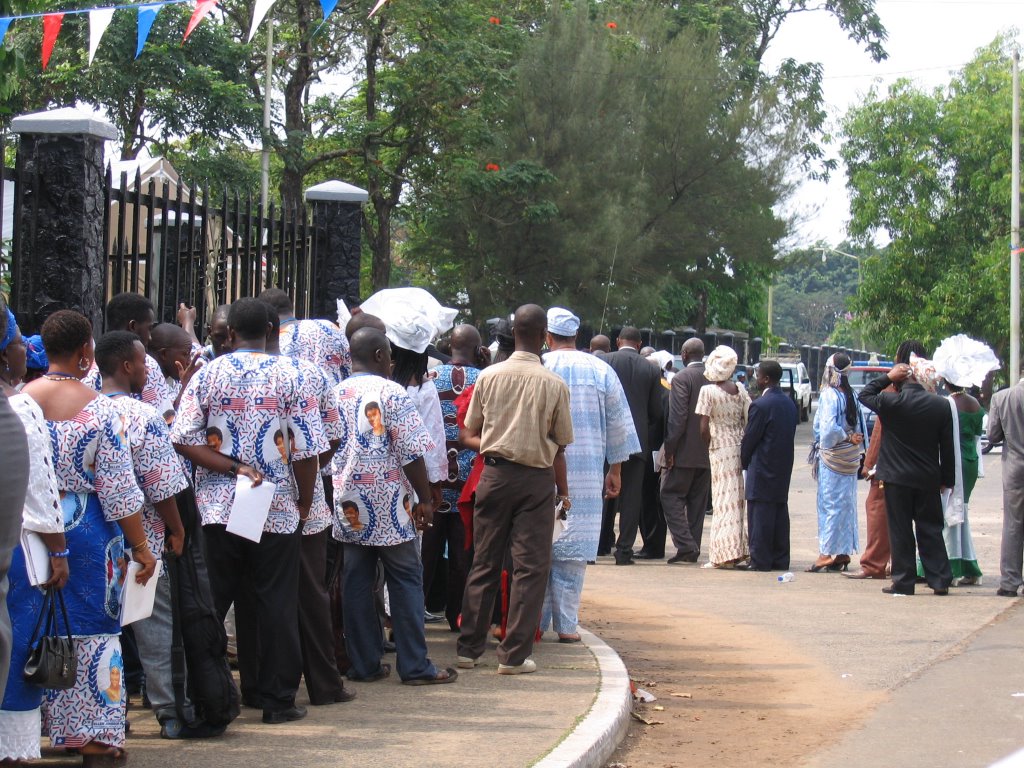
Inauguration Day


The view from where we sat on the grounds of the Capitol Building. Those are security people on the dome -- not pigeons (-:


Heading to the Executive Mansion for a reception on the South Lawn

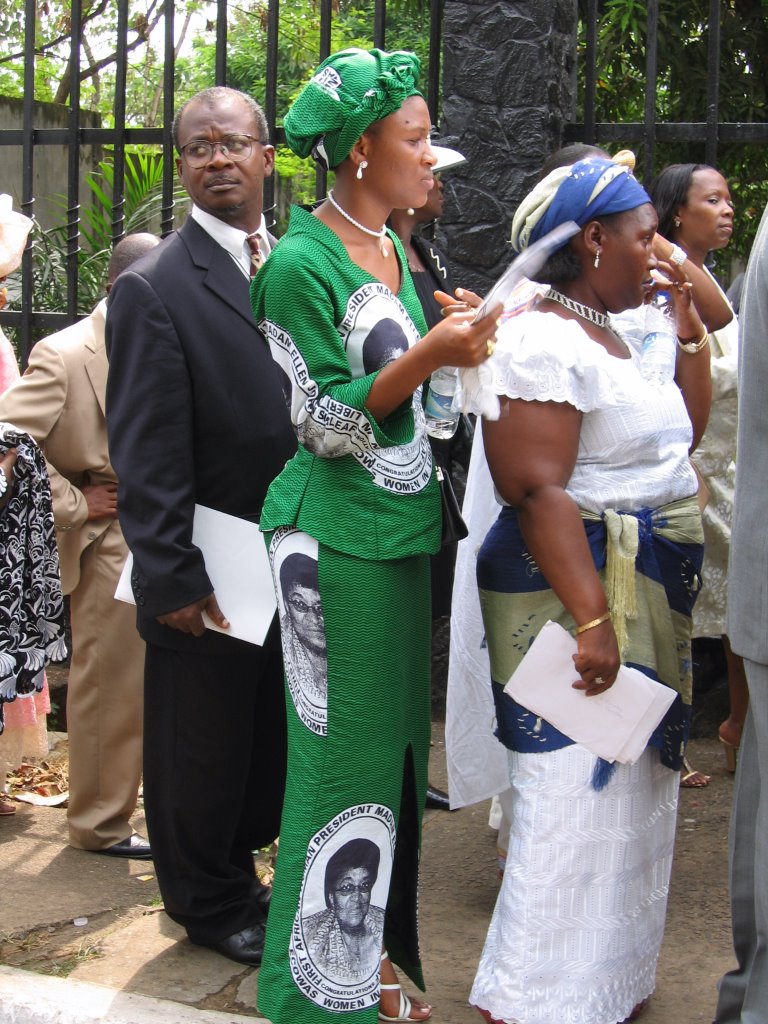
Many people wore "Ellen lappas"

Thursday, January 05, 2006

Chris Brownell, Wood Carver

-Ganta, Nimba County

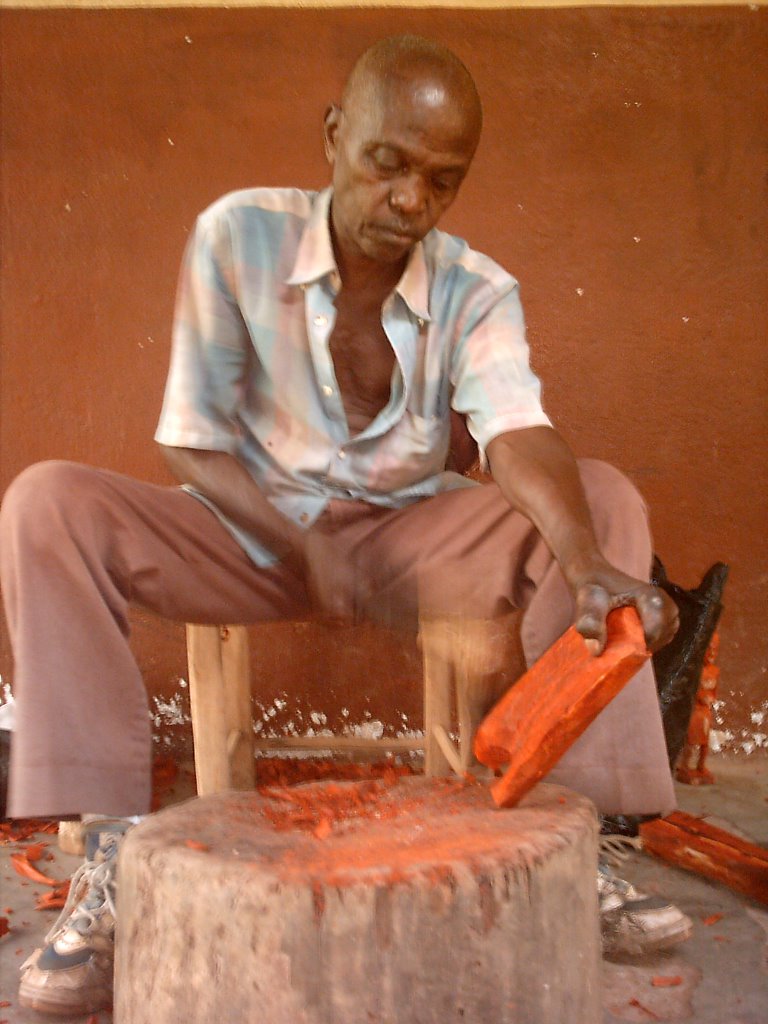
Chris Brownell has lived at the Grace United Methodist Rehab Center since 1973 when his family sent him here after he contracted leprosy. At the time, he says, his family could not deal with the stigma surrounding the disease. The Rehab Center offers medical care and vocational training for people with challenging conditions. Trades include mat-making and carpentry. Mr. Brownell is a wood carver—an excellent one, despite the loss of all his fingers. He makes decorative wall pieces out of camwood—a heavy, sienna-colored wood found here in Liberia’s forests. He is making “a woman kneeling down” now, and says it will take him about five days to carve the piece. His workbench is a tree stump, and he uses a spear to shape the wood. The spear is a tool that resembles a crowbar but is razor sharp at the tip. Five days at several hours a day, and he will charge US$15 for the piece. Some of the carvings are sold to visitors who come to the Center, and some of them are sent to Monrovia where we—having no clue and no concern about the amount of work the laborer put in—often bargain the price down as low as we can go.

Wednesday, January 04, 2006

Cleaning Up the City

-Ganta, Nimba County

A terrible thing was happening as I prepared to leave Monrovia today for a trip to Ganta, Nimba County. Groups of policemen were going around the city ordering street vendors to break down their booths. In large letters, they painted on the condemned structures “Move by order of MCC”. Apparently this is City Hall’s way of cleaning up the city for the January 16 Presidential Inauguration. But what about the livelihoods of these people? Some of them, like Elsie Boley who sells clothes on Broad and Johnson, have had their colorful booths for many years. Elsie has worked at hers for four.

These tiny shops are not eyesores. Sure, they get dirty after a while, but they should not be broken down for the sake of international visitors. Oh…now that I think of it, perhaps the booths are considered a security risk, being illegally on the sidewalks or too close to the main roads as they are. (Sigh) I suppose that would be justification for what is happening…

Still. While some people are commending City Hall for cleaning up, I wish the booths could stay. They are some of the things that make Monrovia a unique capital city—our capital city. The booths and shops are used to sell phone cards, lottery tickets, stationery, or other items. Some are forex bureaus where you can change USD to Liberian Dollars. Some are barbershops (or “barbing” shops, as they say on their signs). Occasionally you will find one sporting an old manual typewriter and a man who will type your letter for $20LD. Sometimes you even find one with an old photocopier hooked up to a small Tiger generator (2 unbelievably poor-quality copies for $5LD). Most of the booths are made of wood. The shops made with cement blocks are usually right by the sidewalk, not on it. All of them have colorful pictures painted on them by local artists. Elsie’s is made of blocks and has royal blue iron doors. There is a small veranda-like area in front of it where she sits, almost hidden by the clothes that hang from wooden rods.

Elsie showed me the citation she received to attend a meeting at City Hall. She said it was delivered just five minutes before the group of policemen arrived at her place with their can of yellow paint. The meeting is scheduled, but the place has been condemned without the vendors having a chance to appeal for exclusion or suggest compromises. New paintjobs and cute Secret Service men hanging around for a week might have been nice. Hhmmm…I may even have stayed and built me an illegal booth right quick!

Oh well. I suppose I’m worrying too much. City Hall can’t possibly tear down all the booths in Monrovia. I’m sure when I go back ten days from now I’ll find most of them still standing. I only hope that by then, Elsie and the other unfortunate vendors who were in the wrong place at the wrong time will be on the way to standing on their own two feet again. They are the life of our vibrant city, and proof that Liberians are experts at making a way out of “no way”.

Thursday, December 29, 2005

My Name

I met yet another old friend today who is appalled that my name is still Elma Shaw. He says he refused to let his wife even hyphenate her name, and could never have married a woman so modern. I, I suppose, could never have married a man so set in tradition.

It's not a common thing for a Liberian woman to keep her name after marriage. In fact, most people don’t even know it’s an option. I know one woman who still says, when she introduces me to someone else, “Sorry, I don’t know her real last name.” She smiles when she says it, but gives me a disapproving look at the same time. She's the kind that would call me by my husband's name if she knew it, despite knowing I have not adopted it. I don't mind at all when people call me by his name, and most times I don't even bother to correct them. But I might mind a bit if people who know my preference choose to ignore it out of their own disapproval.

Women have many different reasons for choosing to keep their maiden name or to take on their husband's name, and all of them are valid. After all, our names belong to us and we should be able to do whatever we want with them.

Sometimes, when people ask, wide-eyed with surprise, "You didn't change your name?" I say "No, and my husband didn't change his either." But really, my decision has less to do with feminist beliefs of equality and more to do with the fact that Elma Lorraine Shaw is who I have always been and who I always will be. It is my name and I am inspired to uphold it for the sake of my family, myself, and my own children. Finally, it is the name I always dreamed of seeing on Honor Roll lists, on diplomas, and in bold letters on books and on screen. As the dreams become reality, I love my name - and the modern me - even more.

Wednesday, December 28, 2005

Deep Undercover

Rumor has it that my husband is a CIA agent. The only basis for this speculation is that he is a white American who works in Africa. But, since sometimes even wives aren’t supposed to know these things, I am beginning to wonder...

Hhmmm…living here during Taylor’s administration…two jobs that took us to war zones in the DRC and Sudan…a recent trip to LRA territory in Uganda… the tinted glasses he wears, talking about the sun is too bright… Could it be? My Sweetie?

The first time I heard this rumor I was very offended, knowing about our struggles as I do. In fact, Shaun was so frustrated about unfunded proposals at the time that I didn’t even bother mentioning it to him. Things are looking up for next year, so when I heard the rumor again recently, combined with the statement that we are rich, I just had to laugh. This time I told him what people are saying, and asked him to “Show me the money!” He laughed his head off at the whole crazy notion.

My down-to-earth, activist, anti-establishment husband is the most unlikely candidate for a CIA job. If he is indeed an agent, he has got to be either the biggest mistake the CIA ever made, or the best undercover agent that ever lived. But, since even wives don't always know the truth, I’ve taken to calling him “Agent Sweetie” – just in case.


"The name is Pie -- Sweetie Pie"

Thursday, December 22, 2005

Lucky Ticket

Monrovia and its suburbs are alive with activity and fun and games as Christmas approaches. The crowd here is playing a game of chance they call "Lucky Ticket" even though there's no ticket involved. Some call it "Gain and Loss" because, as a young boy explained to me, "sometimes you gain and sometimes you loss." For $5LD you get three metal hoops and a chance to win things like soap, pasta, juice, plastic bowls, biscuits and footballs. I watched for a long time and gave a boy four hoops to play for me while I played two myself. It wasn't our lucky day, but it sure was fun!
(Jacob's Town, Monrovia, LIBERIA)

Friday, December 16, 2005

Firestone Questions

(Dr. Owl from today's Daily Observer)

There's another Firestone story in the paper today. Firestone's been in the news a lot lately, beginning a few weeks ago with headlines accusing the company of practising slavery on its rubber farms in Liberia. The complaint is coming not from rubber tappers and their families, but from a group of lawyers and human rights activists. The lawyers say the tappers are too afraid to speak for themselves. I say if not one tapper out of thousands is willing to sacrifice his job by speaking up for the cause, THERE IS NO CAUSE. Lawyers and activists have important roles to play in struggles for justice and fair treatment, but they cannot lead someone else's revolution. Where are the tappers who will speak up and tell us where they stand and what they want? Are they silent because they are afraid? Or are they silent because Firestone provides them housing, medical care, schools, and salaries that far surpass what the Liberian government pays? Lawyers, please bring your witnesses to the stand!

Monday, December 12, 2005

Trouble Brewing

Ma Edith came to work late this morning. She said there was trouble in her Chugbor neighborhood last night, and along Old Road and Tubman Boulevard near CDC Headquarters. These are all places that surround our house, but we didn't hear anything during the night. George Weah came back to town last night (after a trip to South Africa) and Ma Edith says his supporters vandalised cars and beat up several people - including some policemen. She and her neighbors stayed up until 4am worrying. "Sis Emma," she said, "the place where I eh, sleep still in my eyes. If it wasn't for my Old Ma I would pack all my things and move back to Ivory Coast because ahn like for things to worry me." A bit worried myself, I asked Shaun to drive Keyan to school although I normally take him. Half an hour later they were both back. No school today because of the trouble brewing.