Friday, October 21, 2005

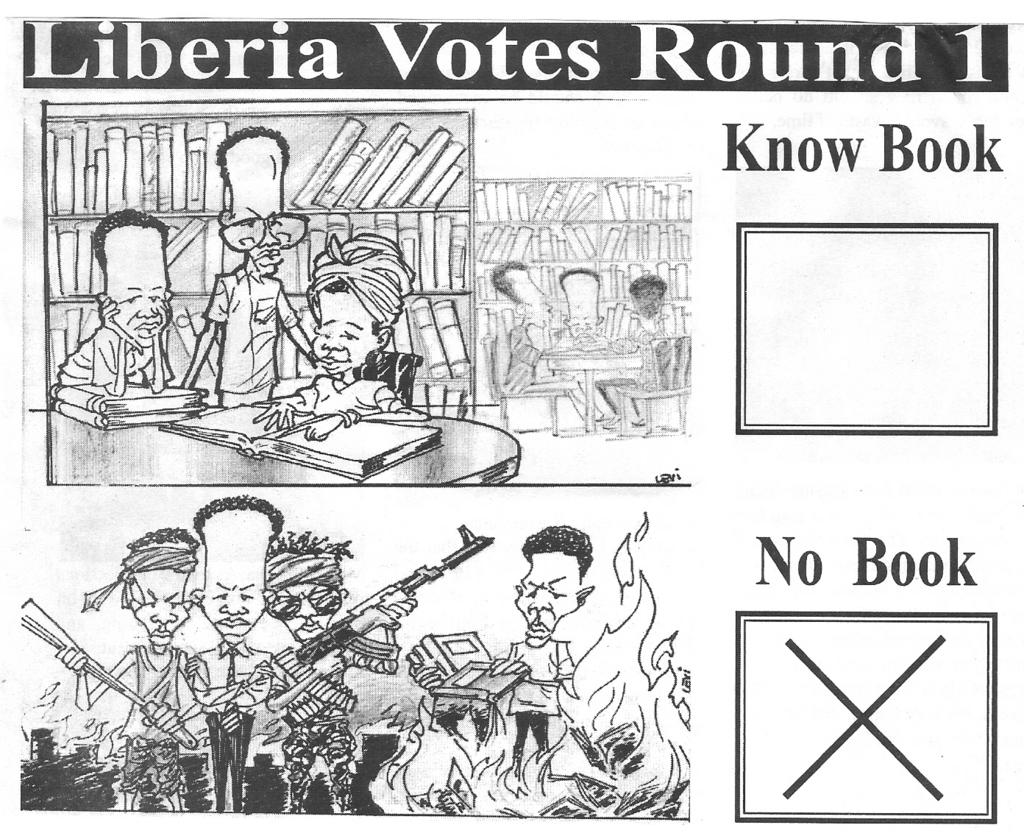
Liberia Votes Round 1


One of the best editorial cartoons of Elections 2005! Published by Levi in today's New Democrat. Though most of George Weah's supporters are not like those depicted here, the ones that can't contain their hate will help give Round 2 to Ellen.

Thursday, October 20, 2005

Novel Excerpt

Joy!

An excerpt of my recently finished novel was accepted today for publication in Liberia Sea Breeze Electronic Journal of Contemporary Liberian Writings.

Redemption Road
is a story of recovery, atonement, and the quest for peace in post-war Liberia. The best description of it comes from my father, who tells everyone “This is a book about all of us.” And so it is. Redemption Road is about the masses and the elite, the victims and the survivors, the fighters and the peacemakers. It is about all of us, and it is for all of us as we struggle with our past and find a way to move forward.

The excerpt will appear in February 2006 at www.liberiaseabreeze.com

Educated Fools!

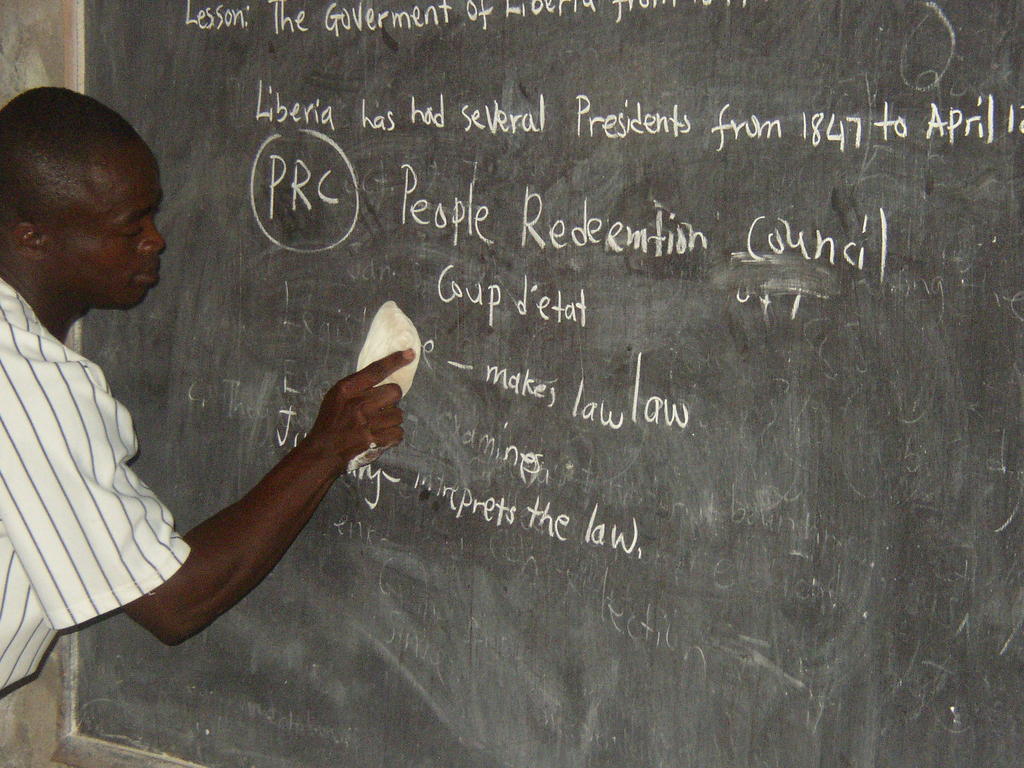
I sat in on a class at a little community school today and listened as the teacher taught his class about the People's Redemption Council that overthrew President Tolbert's government in the April 1980 coup d'etat. As he wrote on the board I was reminded of a placard I saw recently that said "Educated Fools! Your education has done nothing for us!"

Wednesday, October 19, 2005

Mob Violence

I got a phone call around 3:45 today: “Mob violence on 13th Street. Don’t go there.” Well, guess what I did. Picked up my camera and ran over there as fast as my little knock-kneed legs could take me. By the time I arrived on the scene though, most of the crowd had dispersed and an eyewitness told me the police had taken those involved away. “What happened?” I asked. “They say he was a rogue,” she answered. Not the mischievous rascal one normally thinks of upon hearing that word, but a thief. When he was caught, the people in the vicinity began to beat him up.

Unfortunately, mob violence is the only sure form of justice here in Liberia, and it has become a major problem. There is a large billboard on the main road asking us not to engage in mob violence, but when we are attacked and robbed (even raped and killed) our perpetrators are usually not tracked down and not prosecuted. If they are caught, a bribe to a corrupt officer sets them free. Even worse, the “human rights people” sometimes get involved to make sure the criminal is set free if there is no evidence found and no charges made in 48 hours. Meanwhile, the victim lies in fear at home, in pain and fear at the hospital, or dead at the morgue. No human rights people in sight.

We are now in a vicious battle with the worst of the criminals—the armed robbers who come at night taking full advantage of our non-electrified city, and under cover of tropical rains that they know will drown out our screams. Once upon a time the rains lulled us to sleep; now they keep us awake. The robbers come armed with guns, knives, and cutlasses because they know that if they are caught and alarms are raised, they will die. Their options: steal and get away, or steal and then kill any witnesses who might alert the whole pissed-off neighborhood. Our options: pretend we don’t see them, pray they won’t panic and kill us, kill them before they kill us, or catch them and take them through a system that will only further victimize us by making us pay to keep the criminal in custody.

15,000 UNwilling-to-get-involved troops, local police with no weapons, and courts with no conscience. Next time someone calls to warn me about mob violence, I’ll have to think more carefully: take a camera, or take a stick?
Tuesday, October 18, 2005

Tally Talk

Our overcrowded Presidential race is almost over, with a little more than 90% of the votes from the October 11 Elections counted so far. Everywhere on the streets and in taxis—where we are packed like sardines with two in the front passenger seat and sometimes up to five in the back—people are talking about it.

Overheard today, as the results were being announced live on the radio:

“Why did some of these candidates waste their money? Just spoiled the whole election!”
“What kind of run-off? They should just give it to Weah. Give him two years—if he can’t make it we will impeach him.”
“Last time the youth gave it to Charles Taylor and the international community said it was OK. They mustn’t do it this time. Weah is not the one to lead this country. Everyone will laugh at us.”
“If Weah doesn’t win I’m taking my passport and getting out of this country.”
"If Weah wins I'm going back into exile."
“The people love Weah. Let him try.”

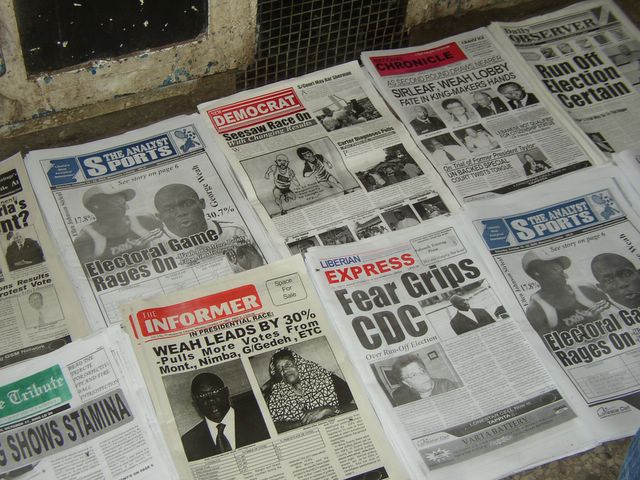
Well. We wanted democracy and it looks like we got it. Twenty-two candidates vied for the nation’s top office, and the leaders are George Weah (30%), Ellen Johnson Sirleaf (19.6%), and Charles Brumskine (12.1%). In early November there will be a run-off between the top two candidates. Who will be in it? Can Brumskine top Ellen in the tally of the final 10%? And if Ellen keeps her position, who will win? Some say that’s a no-brainer, but it really isn’t clear. In a normal place the Harvard graduate (Ellen) would win the high school drop-out (Weah), but this is Liberia and anything can happen here. One of today’s papers says “Fear Grips CDC” (George Weah’s party). Nothing but hype. The support for George Weah is phenomenal, and after the jubilant and electrifying outpouring I saw on the day of his rally I am positive his 30% will come out again and vote for him in the run-off. The question is this: will enough of the 50% who did not vote for either Weah or Ellen show up to tip the scales in Ellen’s favor?

Monday, October 17, 2005

Newspapers (10/17)


October 17 Newspapers displayed on the ground where vendors sell by the Ministry of Education. Posted by Picasa

Sunday, October 16, 2005

Making History

It's a lovely, sunny day here in Monrovia. Remarkable because we're in the middle of a very rainy Rainy Season. A gentle breeze is stirring through the trees and reaching me easily as I sit in my windowless house. All the glass panes were looted during the war so all we have are mosquito screens and iron bars to keep the thieves out. Not real protection, really, when armed robbers can simply break the door down and saunter inside as if they own the place. Yes, this is the new Liberia we live in. Right about now we are making history in all sorts of ways: most UN Peacekeepers on the continent, highest crime rate ever, only capital city (heck, country) with no electricity and no pipe-borne water, and in just a few days we may have the first female President in Africa. Kevin Sites is in the Hot Zone; I'm in the Twilight Zone.

Sunday, June 12, 2005

In Memory of Simeon

I ran into Isaac today. He’s a young boy I met six years ago. Isaac still spends his days, as he did back then, hustling on the streets of Monrovia. He told me that Simeon, the blind man he used to lead around to beg for money, recently passed away.

Simeon, I am sitting here wishing I had encouraged you to touch me. To rest your hand on my head and know how tall (or short!) I am. To feel my small face, long braids, and thin arms. To “see” me more accurately in your mind.

What did my voice tell you? Only that I am a Liberian woman with a slight American accent. Only that I was always happy to see you. Could you tell I was also sad to see you wandering the streets asking strangers for money to help you survive? How did you lose your sight, Simeon? Or were you born that way? How did you know when someone gave Isaac a little cash for you? How did you know how much there was at the end of the day? Where did you live? Who helped you get ready in the morning, and who helped put you to bed at night? What were your ideas for what our society could do to help the blind? All these questions I didn’t ask, and now you are gone.

I am sitting here thinking maybe now you can see me, from the other side where all answers are revealed and where all things are possible. But who am I, Simeon, and what are the streets of Monrovia when your eyes can now see your own bright smile, majestic angels, the splendor of Heaven, and the face of God?

Friday, April 22, 2005

We Will Remember Them

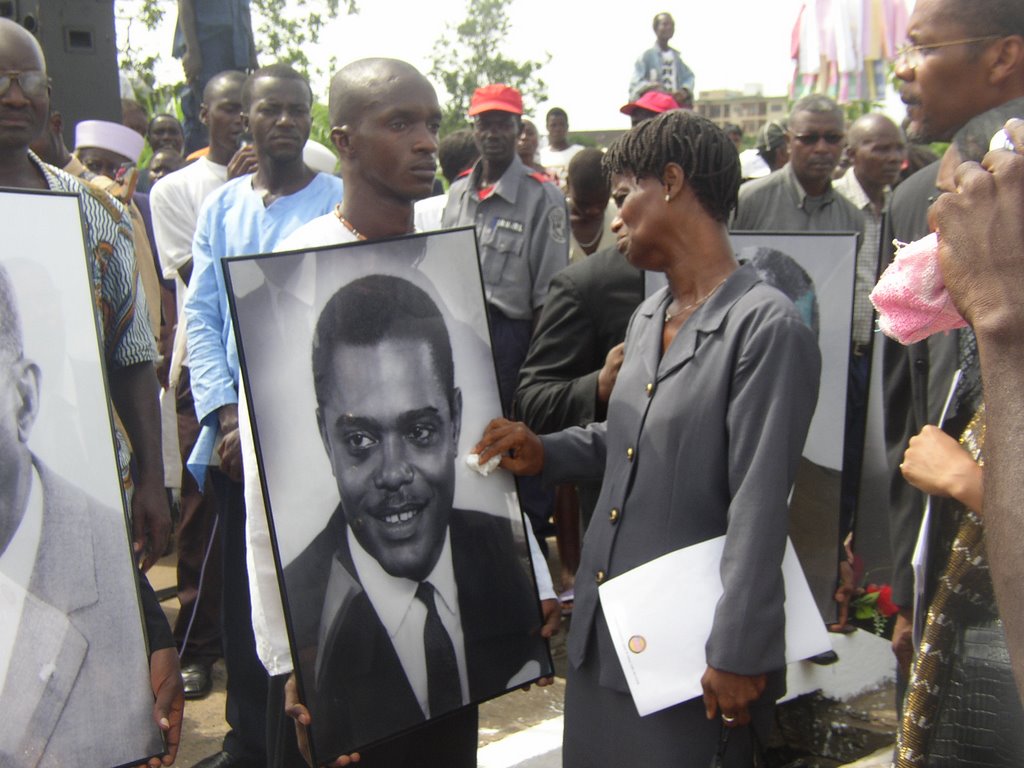
Today marks the 25th anniversary of the infamous executions of 13 of Liberia's most illustrious leaders. And today, for the first time since it happened, relatives and friends filled every pew at Trinity Cathedral for a memorial service in their honor. We could not do this during the ten years of Doe's regime, and for the last fifteen years we have been at war.

Twenty-five years is a long time to mourn without closure. Even after today, though, I don't know if all hearts can truly be still. But we have done what we needed to do for our loved ones and for ourselves, and we have chosen to focus on love, forgiveness, and reconciliation in a new Liberia.

13 men:
Our grandfathers
Our fathers
Our brothers
Our uncles
Our cousins
Our godfathers
Our leaders
Our mentors
Our friends...

We will remember them.


Please Note: You do not have to set up your own blog to make a comment. You may use the "anonymous" identity, and write your name (if you wish) in your post. We look forward to reading thoughts and memories from relatives and friends

1


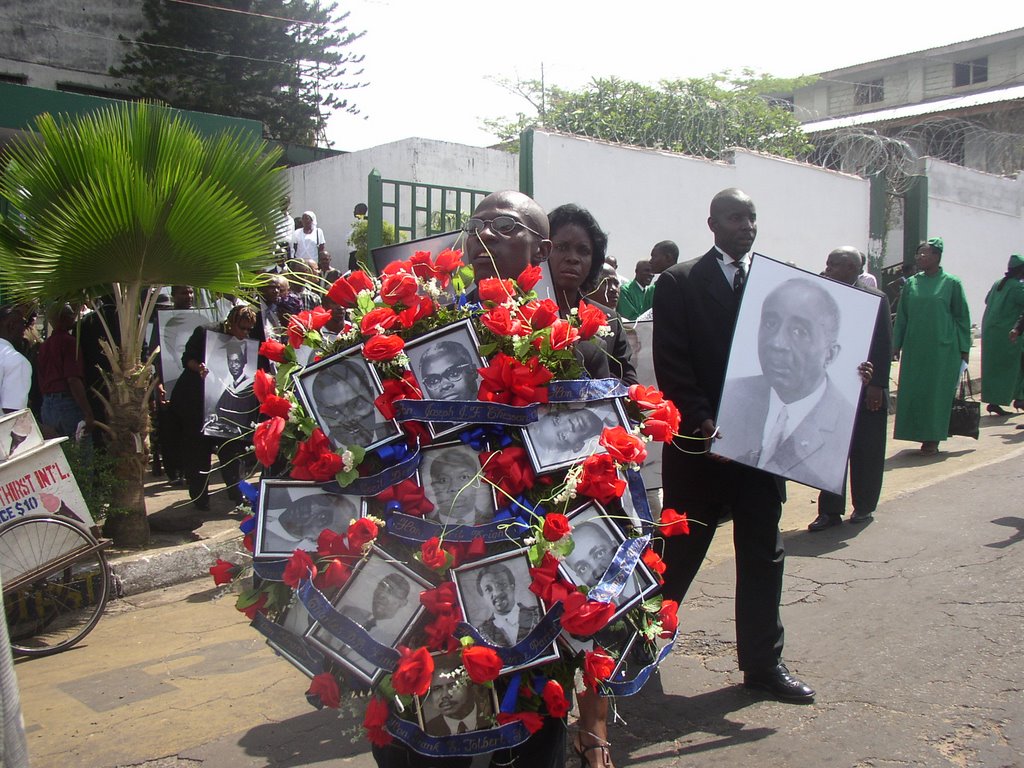
Hundreds of friends and relatives poured out of Trinity Catheral at the end of the service to head to the memorial site together. The floral wreath is decorated with photographs of the 13 men. The large portrait following is of Richard A. Henries, Sr., Speaker of the House of Representatives.

2


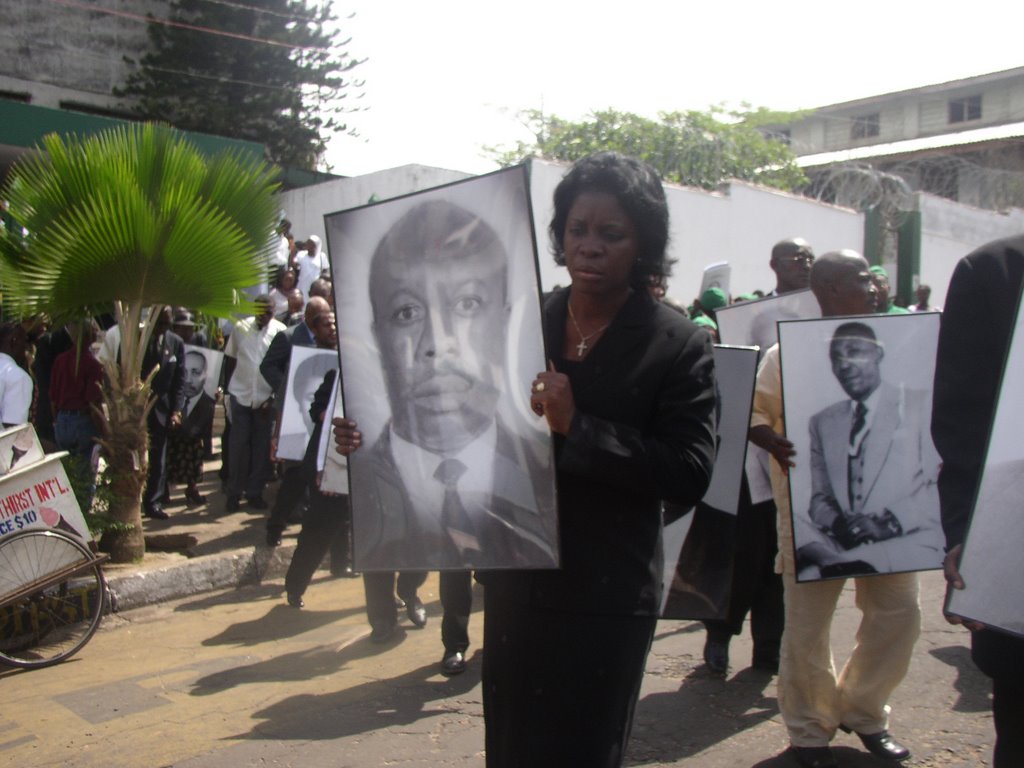
Mai Bright Urey with the portrait of Cyril Bright, Minister of Agriculture. The portrait on the right is Charles D.B. King, Member of the House of Representatives.

3


Philip Parker waiting to march in the procession with a portrait of his father, P.Clarence Parker III - Chairman of the National Investment Commission & Treasurer of the True Whig Party.

4


At the memorial site in the Palm Grove Cemetery on Center Street where the men were buried. We stood staring at those portraits for ages, some of us wondering about what could have been. My grandmother's house is opposite the cemetery, and I clearly remember us watching the mass burial from her front window in April 1980.

5


Several people walked up and wiped the faces of their loved ones or whispered words from their hearts. Here, a woman wipes the face of C.Cecil Dennis, Jr., Minister of Foreign Affairs. The only time I have ever seen my Dad cry was when we heard that Cousin Cecil had been killed.

6


Yvette Chesson Wureh passing out Liberian flags meant to symbolize love, forgiveness, reconciliation, and "Liberty and Justice for all" in a new Liberia. The portraits (l-r) are of D. Franklin Neal, Sr., Minister of Planning and Economic Affairs, and James A.A. Pierre, Chief Justice of the Supreme Court.

7


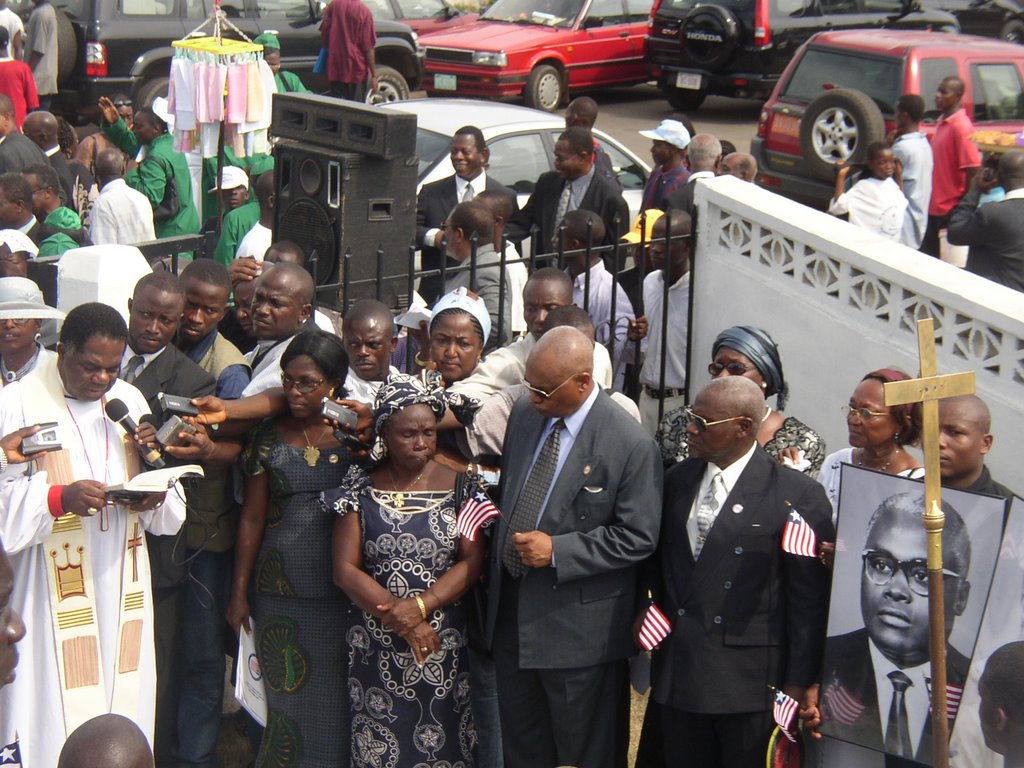
The Right Reverend Edward W. Neufville II officiated at the memorial site. In the portrait on the right is Joseph J.F. Chesson, Sr., Minister of Justice and Attorney General.

8


We Will Remember Them

Cyril Bright, Minister of Agriculture

Joseph J.F. Chesson, Sr., Minister of Justice and Attorney General

C. Cecil Dennis, Jr., Minister of Foreign Affairs

Richard A. Henries, Sr., Speaker of the House of Representatives

D. Franklin Neal, Sr., Minister of Planning and Economic Affairs

P. Clarence Parker III, Chairman of the National Investment Commission and Treasurer of the True Whig Party

James T. Phillips, Jr., Former Minister of Finance, and Former Minister of Agriculture

James A.A. Pierre, Chief Justice of the Supreme Court of Liberia

John W.F. Sherman, Minister of Commerce, Industry, and Transportation

Frank J. Stewart, Sr., Director of the Budget

Frank E. Tolbert, Sr., President Pro-Tempore of the Senate

E. Reginald Townsend, Chairman of the True Whig Party

Our grandfathers
Our fathers
Our brothers
Our uncles
Our cousins
Our godfathers
Our leaders
Our mentors
Our friends...

We will remember them.

Thursday, March 10, 2005

Decoration Day (Photos)


Miss Joanna with her daughter and grandaughter.
Decoration Day is a family affair.


Whitewash boy. 50 Liberian Dollars per grave.


Yes, this was "Decoration Day"

Dancing on the Graves


Decoration Day, to put it mildly, is not what it used to be. The day set aside to honor loved ones, relatives, friends, and public servants who have passed away, has now become a carnival of sorts. I don’t know how long it has been this way, but I first saw the new Decoration Day five years ago—back when there was not yet a memorial set up at the Palm Grove Cemetery for President Tolbert and the other civil servants who lost their lives during the 1980 coup.

Today, as has become the custom on the second Wednesday of March, thousands of people throng to the cemetery on Center Street early in the morning to eat, drink and be merry. They will be entertained by musicians and comedians, stirred up by preachers of the gospel, and fed by vendors who are there to sell liquor, frozen Kool-Aid, roasted meat, and a variety of snacks.

Only a small fraction of the crowd is actually here to clean graves, pay their respects, and lay wreaths or flowers. Among this group are small parties of young people who have lost friends. They wear uniform T-shirts that say things like “We miss you” and “Why so soon?” But these young people are not here to be solemn; they are here to dance on the graves of their buddies, commemorate the good times they had together, and celebrate their own volatile lives. To an outsider, or to the old conservative families who bought the first plots at Palm Grove, the whole atmosphere might seem charged with unruliness and disrespect. But life is short, and the dead are in a much better place. Who are we to tell anyone not to rejoice in the face of death?

Monday, March 07, 2005

Madina: Portrait of a Liberian Village


My family and I spent half the day here in Madina, a Vai village in Garwula District, Grand Cape Mount County. We came to be with our friend Kadalla, who recently lost his sister. Today is the seventh day since her burial—and, the people here believe, the day her soul loses its ability to see what is happening in the world of the living. The entire village is partaking of the traditional rituals—sharing a meal, presenting monetary gifts to the family, and remembering the young woman who grew up in their midst. It is not a sad occasion, and we are happy to be far away from the hustle and bustle of Monrovia.

Kadalla tells us only about 40% of Madina’s population remains here, on their ancestral land. Some of the people have become refugees from the civil war. (Klay, which was the site of several battles, is less than ten minutes away from where we are). Others have moved to the city in search of jobs and higher education. There is a beautiful school here, at the end of a long uphill path lined with evenly spaced palm trees on each side. But the school only goes up to 9th grade, and most Madina girls and boys end their formal education here. Kadalla says there is not one Madina girl yet who has graduated from high school. Kadalla was one of the lucky ones; he was educated by Peace Corps volunteers, won a scholarship to St. John’s High School in Robertsport, and eventually graduated from the University of Liberia. He is also one of the rare ones—a village son who has never forgotten or deserted his roots.

I like Madina with its close-knit families, outdoor kitchens, and solid mud houses—some of them decorated with patterns and handprints. There are a few small convenience stores around, a large market close by, and a clinic run by World Vision, an international NGO. The residents who show us around keep apologizing for the rocky hills we have to climb and descend, but to me, the rocky hills are a major part of what makes the place so appealing. There are houses on the hills, fruit trees and lush green vegetation all around, and, in the valley, a large creek that has been fed by the Lofa River “since time immemorial” as we like to say here. There’s no running water in Madina, so the creek is vital to the lives of the people who live here. Typical of the organization evident everywhere in the village, one side of the creek is reserved for women and children, and another side for men. Today the creek is less than half its Rainy Season depth, and the children of Madina are frolicking in it as their parents and grandparents did before them. Many of them will leave this idyllic setting someday, in search of something better. But today, for them and for me, Madina is the best place to be.